
Hotel Lock System for Resorts: What Procurement Teams Get Wrong Before They Sign Anything
Procurement teams sourcing a hotel lock system for resorts almost always walk into supplier conversations focused on the wrong thing. Price per unit dominates early discussions — sometimes entirely — while the factors that actually drive total cost of ownership get buried. Integration complexity, firmware update cycles, after-sales support infrastructure. That stuff gets pushed to the back of the negotiation. That sequencing mistake is expensive.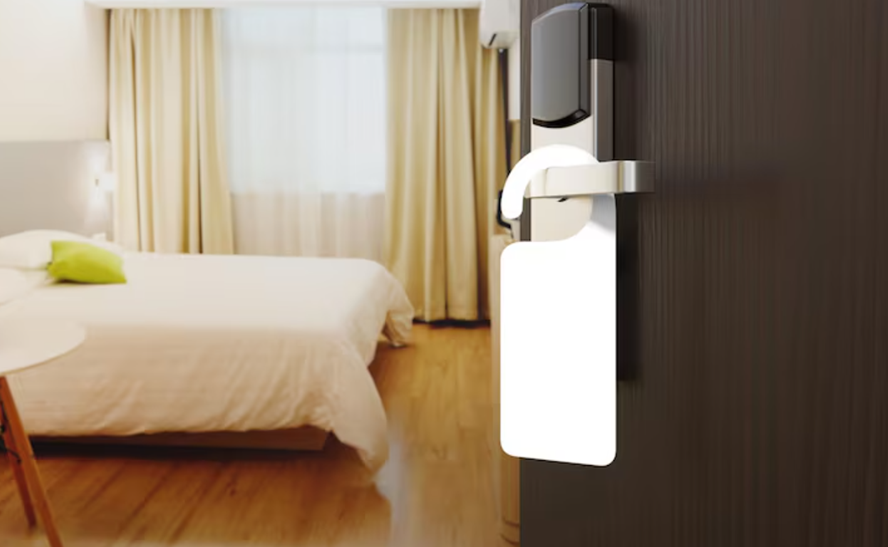
The resort context is genuinely different from a standard hotel deployment. You’re dealing with multiple property zones: guest rooms, spa facilities, staff corridors, marina access points, pool cabanas. A lock system that holds up fine in a 120-room urban hotel may fall apart under the operational demands of a 400-key beachfront resort running 24-hour activity across a dozen distinct access tiers. Teams that don’t account for that zone complexity upfront often find themselves mid-rollout, renegotiating scope — which is exactly when the supplier’s bargaining position flips and yours weakens.
Certification documentation is another area where buyers consistently underestimate the due diligence required. ANSI/BHMA grades, EN standards for European markets, fire egress compliance ratings — these aren’t interchangeable, and not every supplier carries the full set relevant to resort environments. Requesting a certification matrix early, before any commercial terms come up, filters out vendors who can’t support multi-market deployments. Do it first. Not after you’ve already invested time in their pitch.
Lead times deserve specific scrutiny too. Resort projects rarely run on linear timelines — phased openings, renovation windows, seasonal constraints — so a supplier’s stated lead time needs to be stress-tested against actual production capacity, not just the number they quote you. Minimum order quantities matter more than they look at first glance. A supplier with a high MOQ might seem cost-competitive on paper but create real surplus inventory headaches for a property that’s expanding incrementally over time.
One scenario worth flagging: procurement teams managing a mixed portfolio — resorts alongside urban or long-stay properties — sometimes apply the same vendor shortlist across all property types. That’s a problem. The requirements for a hotel lock system for serviced apartments differ meaningfully from resort specs, particularly around self-check-in functionality and remote access management. Conflating the two leads to either over-specifying for one context or under-delivering for the other. Neither outcome is cheap to fix.
- Request firmware update and cybersecurity patch history from any shortlisted supplier — not just current specs, but the track record
- Confirm whether the lock system connects to your existing property management system via open API or requires proprietary middleware
- Verify that warranty terms actually distinguish between hardware failure and software-related failures (many don’t, and that gap will cost you)
- Get escalation response SLAs in writing before contracts are signed — verbal commitments on support timelines are worth nothing
How to Evaluate Hotel Lock System Suppliers on Specs That Actually Affect Operations
Supplier evaluation for a hotel lock system for resorts rarely fails on the big-ticket specs — it fails on the operational details that only surface six months into deployment. Procurement teams that focus exclusively on headline features like mobile key compatibility or encryption standards often miss the variables that determine whether a system actually performs at scale across a large property.
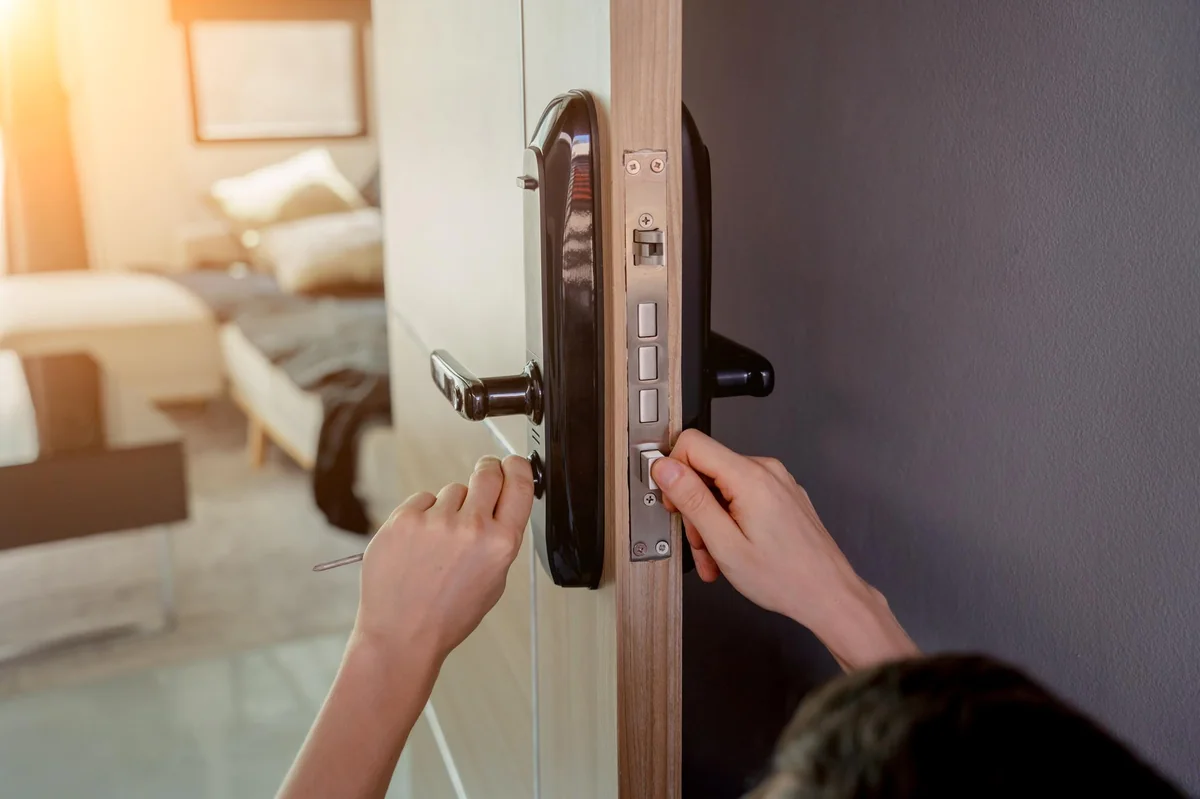
Start with integration depth, not integration claims. Any supplier can list PMS compatibility on a spec sheet. The real question is whether that integration is native, certified, and actively maintained — or whether it’s a one-time connector built for a previous client’s setup that hasn’t been updated since. Ask for a current list of PMS platforms the supplier supports with documented API integration, and confirm whether updates to those integrations are included in the support agreement or billed separately.
Hardware durability specifications deserve more scrutiny than they typically get in resort environments. Coastal humidity, extreme temperature cycling, and high daily use volumes — particularly in high-occupancy periods — stress components in ways that standard commercial-grade ratings don’t fully capture. Request environmental test data, not just IP ratings. A lock rated for moisture resistance in a controlled test environment may perform very differently on an oceanfront villa door exposed to salt air year-round.
The evaluation criteria shift somewhat when a supplier also positions their product as a hotel lock system for serviced apartments — that context involves longer-term guest stays, different access frequency patterns, and often tighter margins on maintenance. Understanding how a supplier calibrates product design for those different use cases tells you something about their engineering depth.
- Confirm minimum order quantities against your actual rollout phasing — some suppliers set MOQs that only make sense for full-property deployments, not staged upgrades
- Request documented lead times for both initial supply and replacement hardware, factoring in regional logistics if the manufacturer is overseas
- Verify third-party certifications relevant to your market (UL, CE, or regional equivalents) and confirm they apply to the specific model being quoted
- Ask how the supplier handles end-of-life hardware — a clear replacement roadmap matters for long-term operational planning
Certifications and lead times aren’t administrative formalities. For a resort operating across dozens or hundreds of access points, a supplier’s logistics reliability is as operationally critical as the lock’s technical spec.
Hotel Lock System for Serviced Apartments vs. Full-Scale Resorts: Sourcing Criteria That Shift
Procurement criteria don’t stay fixed across property types — and that’s a point buyers sometimes underestimate until they’re mid-negotiation with a supplier who clearly built their product line around one format and not the other. A hotel lock system for resorts operates under a fundamentally different pressure profile than a hotel lock system for serviced apartments, and those differences should reshape the sourcing conversation before any RFQ goes out.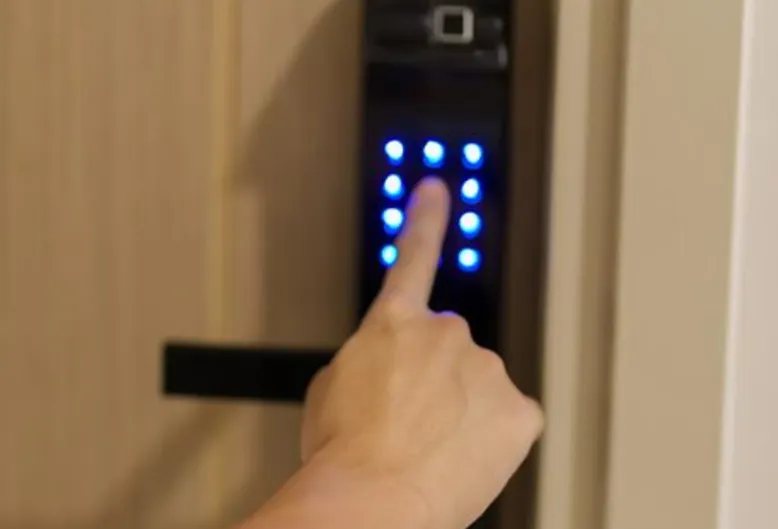
Serviced apartments deal with extended-stay guests, semi-permanent tenants, and high credential turnover — which puts the emphasis on remote key management, mobile access flexibility, and audit trail depth. The hardware doesn’t need to absorb the same volume of daily cycling that a resort pool entrance or beach club gate handles, but it does need to integrate cleanly with property management systems built for mid-to-long-term stays. MOQ thresholds matter differently here too: a 40-unit serviced apartment building has no use for a supplier whose minimum order assumes a 300-room deployment.
Resorts flip nearly every one of those priorities. High guest volume, aggressive check-in windows, outdoor and semi-exposed access points, multi-venue credentialing — these aren’t edge cases, they’re the baseline operating environment. Durability ratings, ingress protection classifications, and throughput capacity move to the top of the evaluation sheet. So does the supplier’s ability to support phased rollouts across zones that may go live on different timelines.
The criteria that shift most meaningfully between these two contexts:
- Credential management complexity — serviced apartments need deep tenant-level controls; resorts need zone-based access tiers across amenities
- Hardware durability requirements — coastal or outdoor resort environments demand higher IP ratings than typical apartment corridors
- Integration scope — resorts typically connect to PMS, POS, and spa or F&B systems simultaneously; apartments usually prioritize PMS and intercom integration
- Replacement part logistics — high-traffic resort locks wear faster; confirm supplier restocking cycles match your operational reality
- Scalability terms — verify that pricing structures and support SLAs hold as the property grows, not just at initial deployment
Mapping these distinctions before approaching suppliers saves significant renegotiation time — and keeps procurement teams from accepting a spec that was built for the wrong property type entirely.
MOQ, Lead Times, and Certifications: The Commercial Checklist for Hotel Lock System Procurement
Procurement decisions for a hotel lock system for resorts don’t end at the spec sheet. The commercial terms — MOQ, lead times, and certification compliance — are where deals quietly fall apart, or where a supplier relationship proves its actual worth under operational pressure.
Start with minimum order quantities. Suppliers serving enterprise hospitality typically set MOQs at a project level rather than a per-unit threshold, but that structure varies considerably. A phased resort expansion — say, opening a second villa cluster eighteen months after the main property — needs a supplier whose MOQ terms accommodate reorder flexibility, not one that requires full-project volumes every time. Confirm this in writing before contracts are signed.
Lead times deserve the same scrutiny. Standard production-to-delivery windows in the access control sector run anywhere from six to sixteen weeks depending on customization depth, hardware finish specifications, and whether the supplier manufactures in-house or relies on third-party component chains. For resorts with fixed opening dates or seasonal refurbishment windows, that variance is not academic — it’s a project risk. Ask specifically about lead times for replacement parts, not just initial deployment hardware. A hotel lock system for serviced apartments may have entirely different restocking cycles than resort-scale inventory, so verify the supplier’s stock model matches the property type being sourced for.
- CE marking — required for properties operating under EU regulatory frameworks
- FCC certification — relevant for RF and wireless lock components in North American deployments
- IP ratings — confirm IP65 or higher for outdoor and coastal-facing installations
- UL listings — increasingly requested by insurers on larger commercial properties
- GDPR and local data compliance — critical where keycard or mobile credential data is stored or transmitted
Beyond individual certifications, ask whether the supplier holds current documentation — not just that they passed testing at some prior point. Certification lapses are more common than buyers expect, and they create compliance exposure at the worst possible time: during a property audit or an insurance review.
The procurement checklist only closes when commercial terms, lead time commitments, and certification status are all confirmed — not assumed.
Conclusion
Choosing a hotel lock system for resorts isn’t a procurement checkbox — it’s a decision that follows the property for a decade or more, through staff turnover, technology shifts, and at least one compliance review nobody saw coming.
Get the certifications confirmed in writing before contracts are signed. Not “we passed testing at some point” — current documentation, dated, on file. That single habit eliminates a surprising amount of downstream headache.
Everything else — the integrations, the credential types, the aesthetics — matters, but none of it covers for a lock supplier whose paperwork expired six months ago.
Frequently Asked Questions
Q: What is a hotel lock system for resorts, and how is it different from a standard hotel setup?
A: A hotel lock system for resorts is an access control infrastructure designed to manage credentials across multiple building types simultaneously — guestrooms, spa facilities, pool gates, staff corridors, and activity centers — rather than just a single tower of rooms. Standard hotel setups typically cover one building with a linear floor plan; resort deployments deal with distributed properties, outdoor hardware exposed to humidity and UV, and guest journeys that cross dozens of access points in a single day. That complexity demands tighter integration between the lock hardware, the property management system, and the credential issuance process at check-in.
Q: How much does a hotel lock system for resorts typically cost?
A: Per-door costs vary widely depending on credential technology (RFID, mobile key, or BLE), lock grade, and whether you’re retrofitting existing doors or specifying during new construction — but full-scale resort deployments routinely run into six figures once software licensing, installation labor, and backend infrastructure are included. The hardware unit cost is often the smaller line item; integration fees, ongoing support contracts, and encoder hardware at the front desk add up faster than most procurement teams expect.
Q: Why do resort lock systems fail more often than standard hotel installations?
A: Outdoor exposure is the primary culprit — locks mounted on beach-facing bungalows or poolside cabanas face salt air, moisture ingress, and temperature swings that indoor corridor hardware was never rated for. Beyond environment, resort systems fail because the integration layer gets neglected: a PMS update breaks the credential sync, and nobody catches it until guests start getting locked out at 11 PM. Certification mismatches between the lock hardware and local electrical or fire-egress codes are a quieter but equally common failure point.
Q: How long does it take to install a hotel lock system for resorts?
A: A phased resort installation — done properly, without disrupting occupied rooms — typically runs several weeks to a few months depending on property size, door count, and how much existing wiring or door prep work is needed. Rushing this timeline is where most problems start; doors get prepped incorrectly, encoders aren’t calibrated before soft opening, and staff training gets compressed into a single afternoon that nobody remembers.
Q: Can mobile keys fully replace keycards in a resort environment?
A: Mobile keys work well for guestroom doors in a resort setting, but full keycard replacement is rarely practical — at least not yet. Pool gates, activity rental lockers, and shared amenity spaces often serve guests who haven’t downloaded the app, have a dead phone battery, or are traveling with children who need their own physical credential. A hybrid system — mobile key as the primary option, RFID card as the fallback — is what most resort operators actually land on after testing pure mobile deployments.
Q: What certifications should a hotel lock system for resorts supplier provide?
A: At minimum, look for current documentation covering electromagnetic compatibility, fire egress compliance relevant to your jurisdiction, and any regional electrical safety certification — and “current” means dated within the last certification cycle, not a test report from years ago that nobody has revisited. If the resort is flagged or branded, the franchisor may also require specific PMS integration certifications or data security attestations. Get everything in writing before contracts are signed; verbal assurances about certification status are worth nothing when an inspector shows up.
Q: How do you choose the right hotel lock system for resorts with multiple building types?
A: Start with an access point audit — map every door, gate, locker, and amenity entry on the property before evaluating any vendor, because the hardware that handles an interior guestroom door is often a different product line than what’s rated for outdoor or high-traffic applications. The integration question matters just as much as the hardware: a lock system that can’t communicate cleanly with your PMS and your activity booking platform will create credential management headaches that multiply with every new amenity you add. Prioritize vendors who have documented deployments on comparable mixed-use resort properties, not just hotel tower references.
Q: Is it worth upgrading an existing resort lock system to support BLE or NFC mobile keys?
A: The upgrade is worth evaluating — but the business case depends almost entirely on whether your guest demographic actually uses mobile check-in, and whether your PMS supports the credential flow end-to-end. Retrofitting BLE readers onto existing lock bodies sounds straightforward; in practice, older door prep and wiring often requires more rework than the hardware cost alone suggests. Run a pilot on a single building type before committing the full property budget.