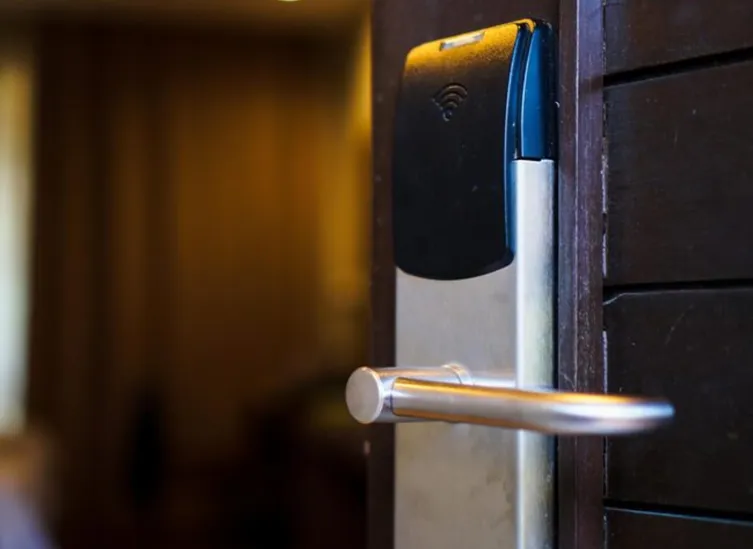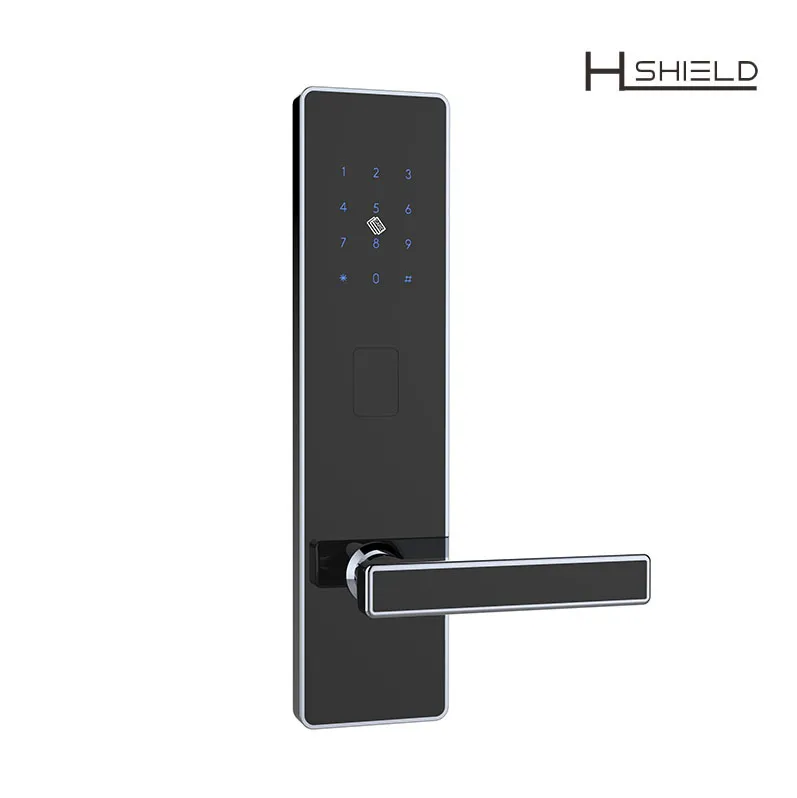

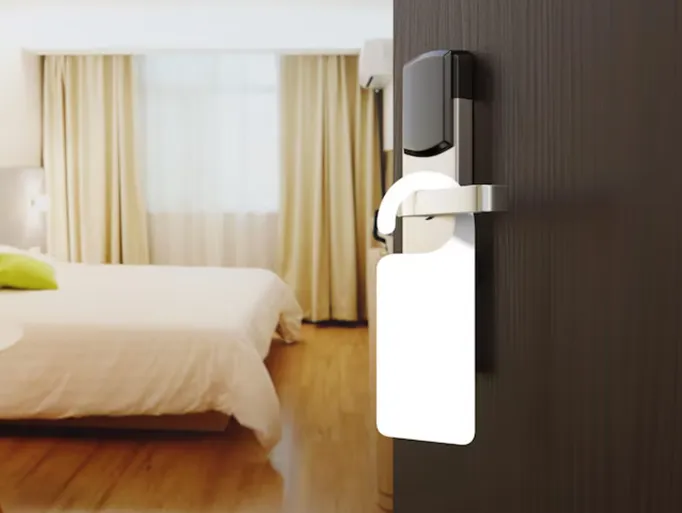
How Resort and Serviced Apartment Operations Drive Completely Different Hotel Lock System Requirements
Resort operations and serviced apartment management sit at opposite ends of the hospitality spectrum — and procurement managers who treat their access control requirements as interchangeable tend to discover that gap the hard way, usually mid-season.
A resort property is a sprawling, multi-zone environment. Guests move between room corridors, pool gates, spa facilities, fitness centers, beach access points, and private villa entrances — often within a single afternoon. A hotel lock system for resorts has to handle that lateral complexity. It’s not just about securing a door; it’s about managing tiered access across dozens of credential zones, coordinating with front desk check-in workflows, and supporting the kind of high-volume key issuance that peaks during holiday periods. The system needs to be robust enough to handle simultaneous check-ins across multiple accommodation types — standard rooms, suites, bungalows — without the front desk becoming a bottleneck.
Serviced apartments operate on a fundamentally different logic. Stays are longer, guest turnover is slower, and the access control priority shifts from volume management to autonomous, low-friction entry. A hotel lock system for serviced apartments typically needs to support remote key issuance — mobile credentials or PIN codes issued digitally — because guests arriving outside staffed hours is the norm, not the exception. Integration with property management software and tenant communication platforms matters more here than raw throughput capacity.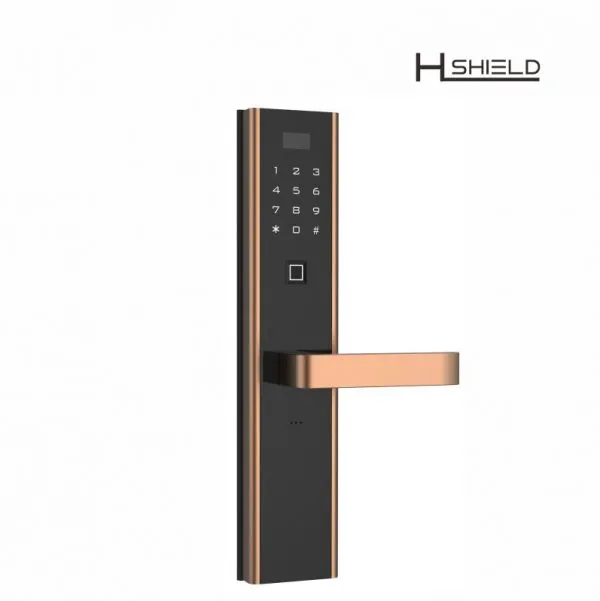
| Operational Factor | Resort Environment | Serviced Apartment Environment |
|---|---|---|
| Primary access challenge | Multi-zone credential management | Remote and self-check-in access |
| Typical stay duration | Short-term, high turnover | Medium to long-term |
| Key issuance method | Front desk RFID card issuance | Mobile app or PIN code delivery |
| Integration priority | PMS, elevator, amenity access | PMS, tenant portal, remote management |
| Supplier evaluation focus | Scalability, zone configuration depth | Connectivity reliability, API flexibility |
For procurement teams sourcing across both property types — which is increasingly common among hospitality groups managing mixed portfolios — the supplier selection criteria diverge sharply at the specification stage. What qualifies a manufacturer for a resort tender may not translate to serviced apartment suitability at all. Understanding that distinction before issuing an RFQ saves significant rework downstream.
Hotel Lock System for Serviced Apartments: Procurement Criteria, Integration Demands, and What Suppliers Often Get Wrong
Serviced apartments sit in an awkward middle ground for procurement teams — they’re not hotels, not residential buildings, and not quite either. The access control requirements reflect that ambiguity directly. A hotel lock system for serviced apartments has to perform like a hotel product at the credential layer while behaving like a property management platform at the operational layer. Suppliers who only understand one half of that equation tend to underperform on the other.
The most common procurement mistake at this stage is applying resort-grade evaluation criteria wholesale to a serviced apartment tender. Resort configurations are built around high staff density, front desk issuance workflows, and physical key handoff points. Serviced apartments invert almost all of that — remote check-in is often the default, not a premium feature, and the system has to function reliably without any on-site staff interaction at all. That changes what “integration” actually means in practice.
API flexibility is the variable that separates adequate suppliers from genuinely capable ones. A tenant portal, a property management system, and a remote access dashboard all need to communicate in real time — and any latency or sync failure in that chain creates a guest experience problem that reflects directly on the operator. Procurement teams should require documented API references during supplier evaluation, not just verbal assurances of compatibility.
Connectivity architecture also deserves harder scrutiny than it typically receives. Consider what the evaluation checklist should actually cover at the specification stage:
- Offline unlock capability when network connectivity drops — and the exact fallback logic the system uses
- Credential delivery methods: mobile app, PIN code, and whether both can coexist on the same lock
- Remote lock and unlock functionality accessible by property managers without physical presence
- Audit trail granularity and how long access logs are retained
- Firmware update process — whether it requires on-site technician access or can be pushed remotely
Certifications matter here too, though not always in the ways buyers expect. Compliance with local fire egress codes, data protection requirements for credential storage, and third-party interoperability certifications are non-negotiable for multi-unit deployments. Suppliers who can’t produce documentation on all three during an RFQ process are a procurement risk — regardless of how competitive their unit pricing looks on paper.
Access Control Architecture Compared: Multi-Zone Resort Security vs. the Self-Check-In Reality of Apartment-Style Properties
Resort procurement teams and apartment-style property operators are solving fundamentally different problems — and conflating the two when specifying a hotel lock system for resorts is where most multi-site deployments go sideways before a single lock is installed.
A full-service resort operates across zones: guest rooms, spa facilities, pool decks, private beach access, F&B back-of-house, and executive floors with tiered access privileges. The architecture required for that environment is credential-layered by design. A single guest credential may need to grant access to their room, a locker, and a leisure facility — while being automatically restricted from staff corridors and neighboring villas. That’s not a feature request. That’s a baseline operational requirement that the lock management platform and the hardware must both support natively, not through workarounds.
Apartment-style properties — including serviced residences and extended-stay formats where a hotel lock system for serviced apartments is the relevant specification — operate under a different logic entirely. The priority shifts toward self-check-in reliability, minimal on-site staffing dependency, and credential delivery that works without any human handoff. Guests need to receive, activate, and use their access method independently. That means PIN code reliability over spotty mobile connectivity, offline lock functionality when cloud sync fails, and a backend that property managers can operate remotely without dispatching staff.
These two models don’t just require different feature sets — they require different supplier evaluation criteria:
- Zone mapping capability: how many discrete access tiers the platform supports per property, and whether that scales across multiple buildings on one estate
- Credential delivery method: mobile-first vs. PIN-primary vs. hybrid, and which modes work fully offline
- Staff permission hierarchy: whether department-level access restrictions can be configured without custom development
- Self-check-in workflow integration: compatibility with PMS-triggered credential issuance and automated revocation on checkout
- Failover behavior: documented lock behavior during server outages or connectivity loss
Suppliers who position a single product line as equally suited to both contexts without configuration evidence deserve scrutiny. The architecture diverges at the platform level — not just at the hardware spec sheet.
Sourcing the Right Hotel Lock System Partner — Certifications, Lead Times, and Operational ROI Across Both Property Types
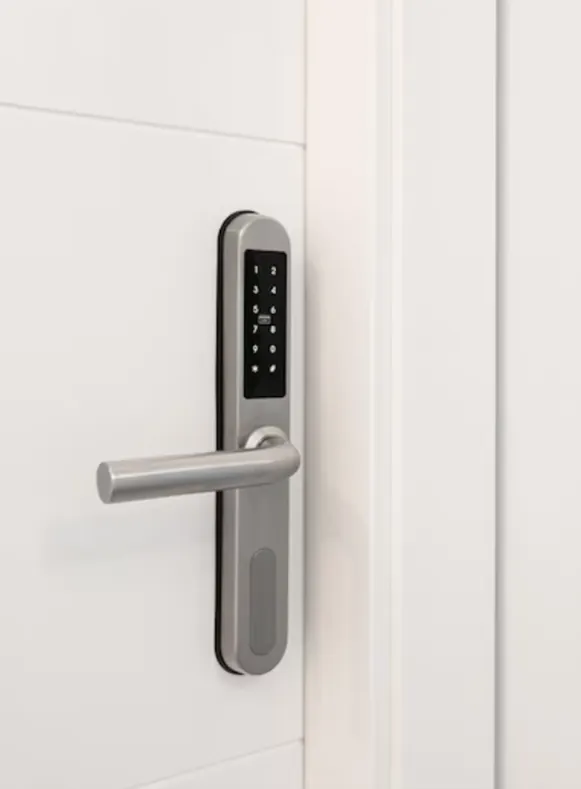
Supplier selection for a hotel lock system for resorts is not a procurement decision that resolves cleanly at the RFQ stage. The variables that matter — certification scope, regional compliance alignment, platform scalability, and post-installation support depth — only become visible when you push past the product brochure and into contractual specifics.
Start with certifications. At minimum, any lock hardware under consideration should carry CE marking for European deployments, FCC or UL certification for North American properties, and relevant fire egress compliance for your jurisdiction. For high-occupancy resort environments specifically, failsafe egress behavior under power loss is a certification point that procurement teams sometimes treat as secondary — it is not. Demand the test documentation, not just the badge on the data sheet.
Lead times deserve more weight than they typically receive in initial supplier conversations. A resort property with phased construction — multiple buildings opening at staggered intervals — cannot absorb a supplier whose standard lead time balloons during peak manufacturing periods. The same applies when deploying a hotel lock system for serviced apartments across a mixed-use estate: staggered unit handovers require a supplier with confirmed production capacity and a clear allocation policy for repeat orders, not just first-run shipments.
- Request documented lead times for both initial orders and reorder cycles, separately
- Confirm MOQ thresholds and whether pricing tiers hold for phased delivery schedules
- Verify spare parts availability and the supplier’s stated component lifecycle — particularly relevant for RFID and BLE hardware subject to firmware dependency
- Establish escalation contacts for installation-phase technical support, not just post-sale account management
Operational ROI across resort and serviced apartment contexts tends to crystallize around two metrics: staff hours recovered through automated access management, and incident reduction tied to audit trail availability. Suppliers who can provide reference data from comparable property types — not generic case studies — give procurement teams a credible baseline for internal business case modeling.
The gap between a supplier who sells locks and one who understands resort operational architecture is wide. Closing that gap before contract signature is the procurement team’s most consequential task in this category.
Conclusion
The right hotel lock system for resorts isn’t the one with the longest feature list — it’s the one backed by a supplier who actually understands how a 300-room resort with multiple access zones, seasonal staff turnover, and 24/7 guest flow operates under pressure.
Audit trails and recovered staff hours are where the real ROI lives. Everything else is marketing.
Before signing anything, get reference data from a comparable property type — not a generic brochure — and nail down escalation contacts for the installation phase. That’s where things go wrong, and that’s exactly when you need someone who picks up the phone.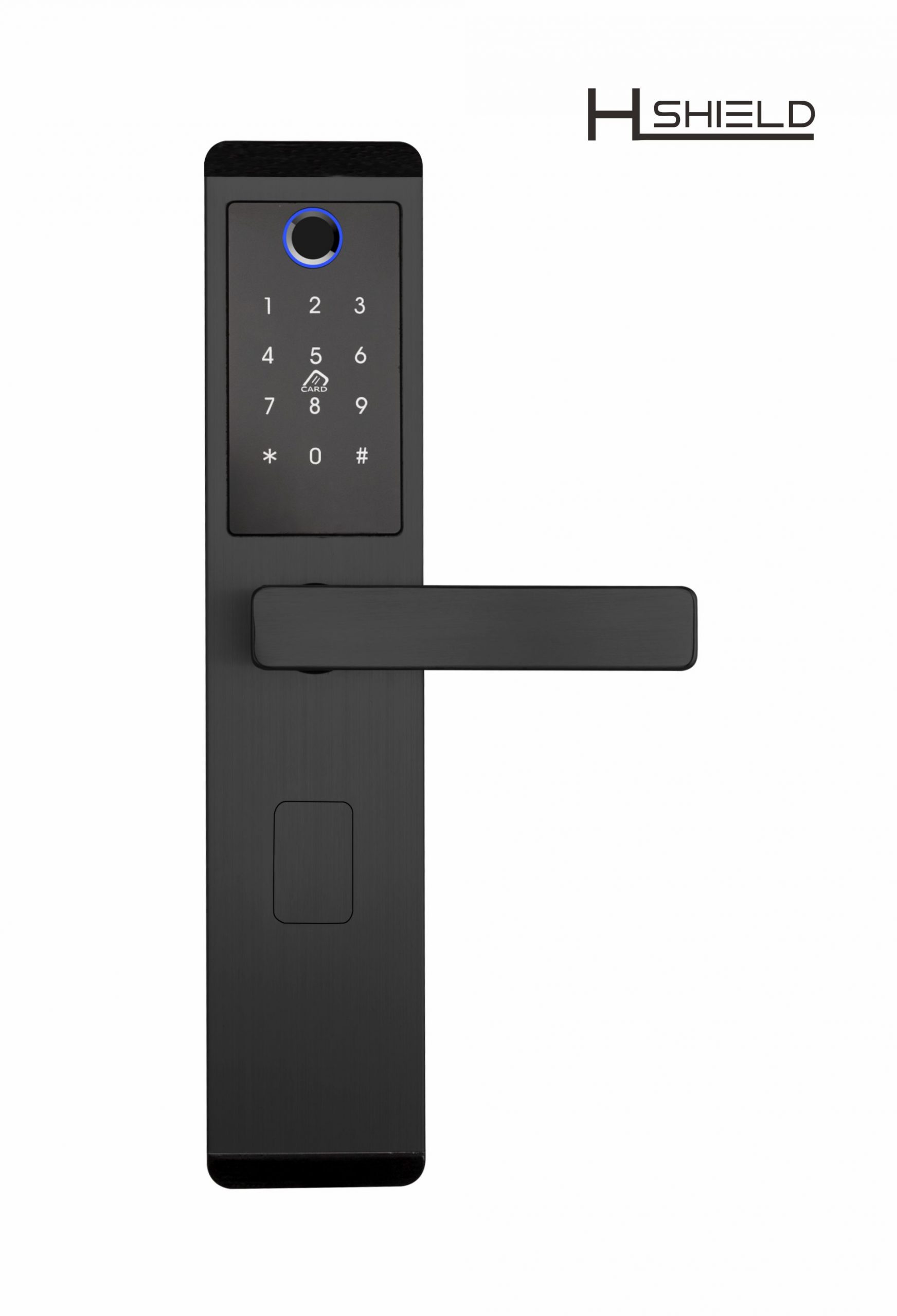
Frequently Asked Questions
Q: What is a hotel lock system for resorts, and how is it different from a standard hotel lock?
A: A hotel lock system for resorts is an access control infrastructure built to manage multiple distinct zones — guest rooms, pool areas, fitness centers, staff corridors, beach access points — under one centralized platform. Standard hotel locks handle a single building with a linear key hierarchy; resort systems have to deal with multi-building campuses, seasonal credential resets, and tiered guest privileges that can change by the hour. The complexity isn’t cosmetic — it’s structural.
Q: How much does a hotel lock system for resorts typically cost?
A: Per-door hardware costs vary widely depending on technology type — RFID, mobile key, and BLE systems sit at different price points — but for a mid-size resort, total project costs including software licensing, installation, and integration typically run well into six figures. The hardware line item is rarely the biggest surprise; ongoing software subscription fees and PMS integration costs are where budgets get caught off guard. Always ask for a full five-year cost-of-ownership breakdown, not just the upfront quote.
Q: How long does it take to install a hotel lock system for resorts?
A: A phased installation across a 200–400 key resort — accounting for multi-building wiring, PMS integration testing, and staff training — commonly takes anywhere from several weeks to a few months. Trying to compress that timeline is one of the most reliable ways to end up with a broken integration on opening weekend. Get a realistic schedule from the supplier, then add a buffer.
Q: Why do resort lock systems fail after installation?
A: The most common failure point isn’t the hardware — it’s a poorly configured PMS integration that breaks every time either platform pushes a software update. Staff credential management is the second culprit: resorts with high seasonal turnover often don’t have a clean process for deactivating old credentials, which creates both security gaps and audit trail noise. The technology itself is usually fine; the operational setup around it is where things unravel.
Q: Can a resort run mobile key and physical key card access on the same lock system?
A: Most modern hotel lock systems for resorts support hybrid credential environments — meaning the same lock can accept both a mobile key via BLE and a physical RFID card. This matters practically because not every guest will download an app, and not every access point (staff service doors, maintenance areas) is appropriate for mobile-only access. The catch is that hybrid setups require tighter credential management discipline to avoid overlap errors.
Q: How do resort lock systems handle staff access across multiple zones?
A: Role-based access profiles let administrators assign credentials by department, shift, and zone — housekeeping gets access to assigned floors during their shift window, maintenance gets access to utility areas, and so on. The audit trail that comes out of this is genuinely valuable: if something goes missing from a room, you have a timestamped log of every credential that accessed that door. That’s not a minor feature — it’s legal and operational protection.
Q: Is it worth upgrading an existing hotel lock system for a resort that’s already operational?
A: The ROI case depends almost entirely on what the current system can’t do — if you’re manually rekeying locks for staff turnover, losing audit trail visibility, or running a system that won’t integrate with a modern PMS, the operational drag is real and measurable. A hotel lock system for resorts that’s five or more years old is likely running on credential technology that’s increasingly easy to clone. Upgrading mid-operation is disruptive, but the alternative is carrying compounding security and efficiency costs indefinitely.
Q: What questions should procurement teams ask suppliers before buying a hotel lock system for resorts?
A: Three questions that actually separate good suppliers from glossy ones: Who is the escalation contact during installation — not a general support line, a named person? Can you provide reference data from a comparable property type (similar room count, multi-zone campus)? And what happens to our access data if we switch platforms in five years? The answers to those three questions will tell you more than any feature comparison sheet.