
Hotel Key Card Lock Wholesale: How to Build a SKU Matrix That Actually Scales
Scaling a hotel door lock bulk order sounds straightforward until you’re staring at a supplier catalog with forty SKU variants and no clear framework for deciding which ones actually belong in your procurement portfolio. The SKU matrix problem is real — and it’s where most hospitality procurement teams either over-specify (paying for features no property needs) or under-specify (creating compatibility nightmares across sites).
Start by segmenting your property types before you touch a single product listing. A budget roadside motel and a 400-room urban business hotel have almost nothing in common from a lock specification standpoint — different card technologies, different durability thresholds, different integration requirements. Mapping SKUs to property tiers first keeps the matrix lean and defensible when finance asks why you’re running three different configurations.
The core variables that should drive your SKU decisions in any hotel key card lock wholesale program:
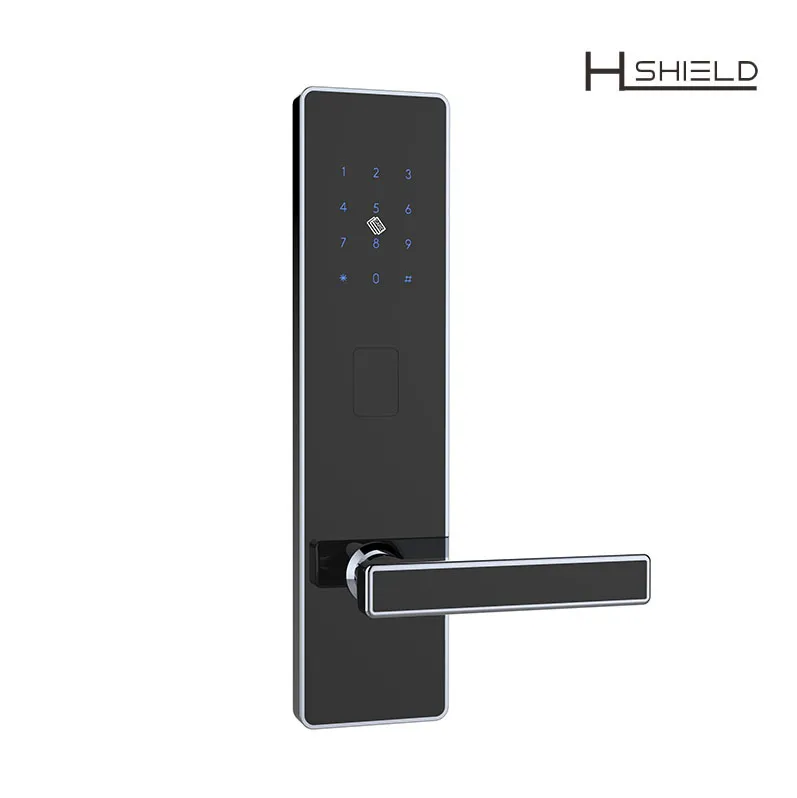
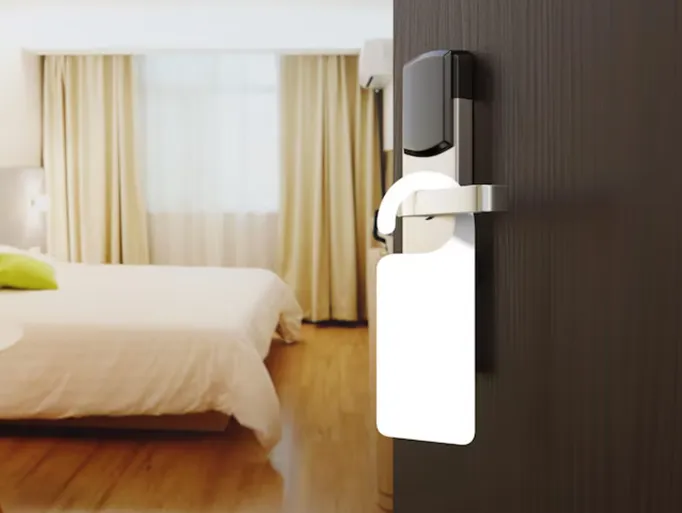
- Card technology compatibility — RFID (13.56 MHz Mifare being the dominant standard), magnetic stripe, or dual-format for legacy PMS transitions
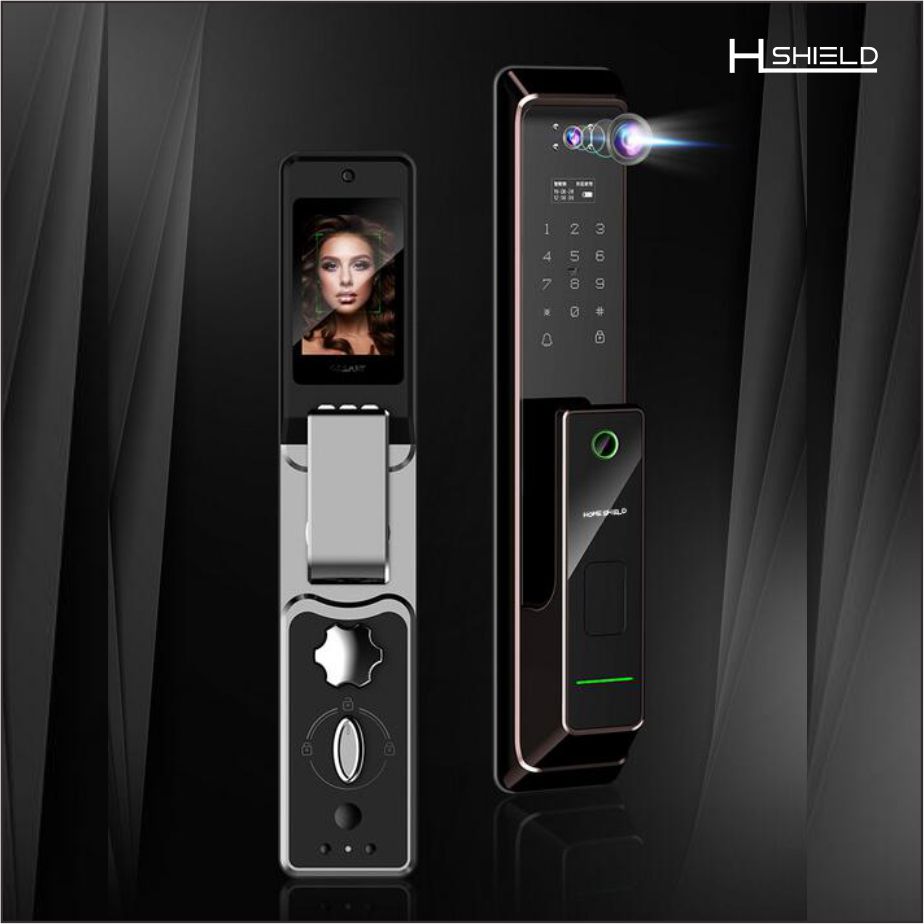
- Connectivity type — standalone offline locks versus online locks with real-time audit trails, which carry a meaningful cost premium but matter for high-security zones
- Backset and door prep specifications — a mismatch here means field modification costs that quietly destroy your landed unit economics
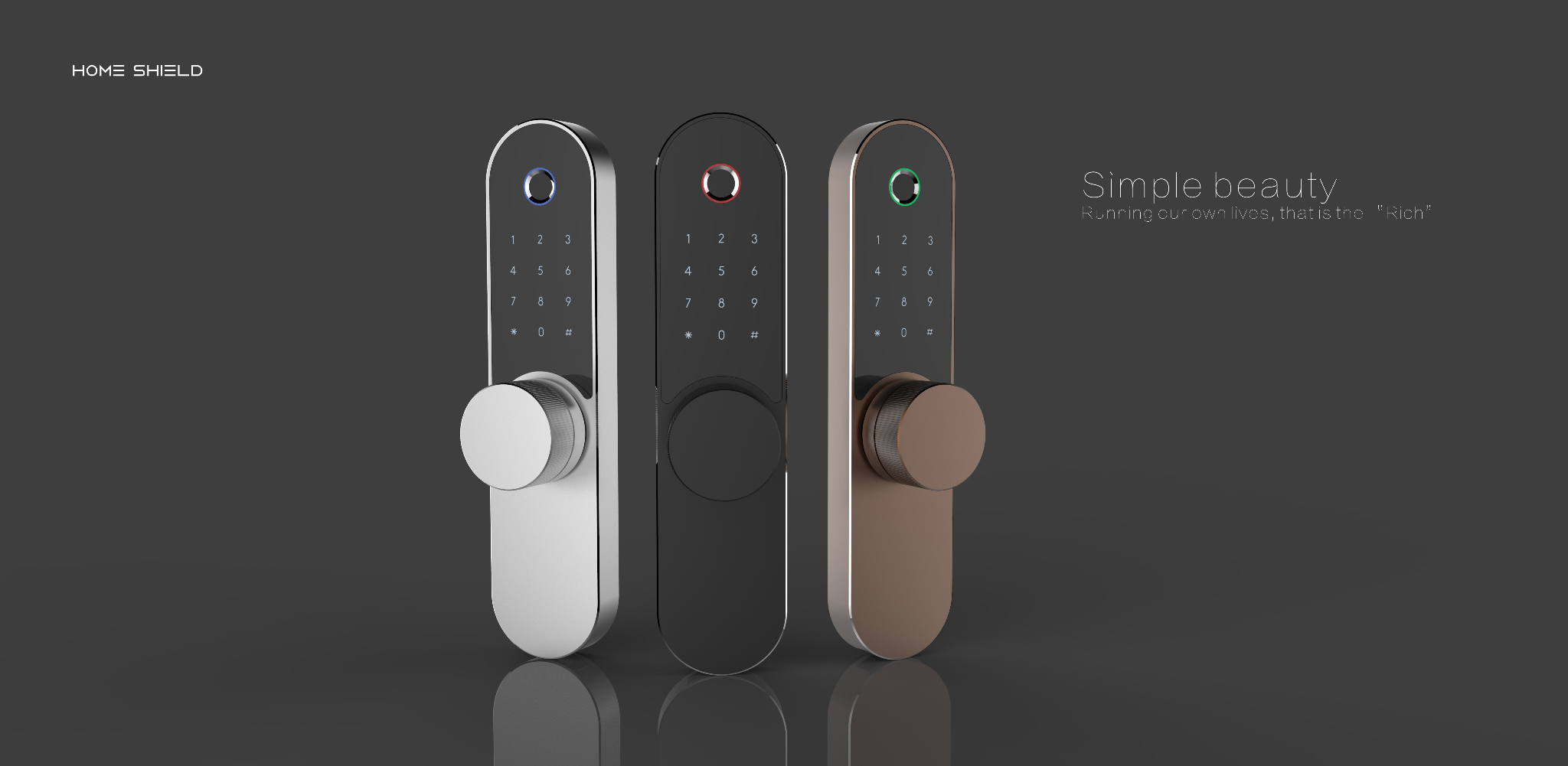
- Finish and form factor — corridor doors, connecting rooms, and suite entries often require distinct hardware profiles even within the same property
- Battery configuration — AA versus lithium packs affect maintenance cycles and long-term TCO more than most buyers initially account for
Once those variables are mapped, consolidate aggressively. The goal isn’t one SKU for everything — that’s rarely achievable — but a structured three-to-five SKU matrix that covers at least ninety percent of your deployment scenarios without custom orders. Custom SKUs kill lead times and push MOQs into ranges that strain working capital.
Supplier conversations should happen at the matrix design stage, not after. Manufacturers sourcing hotel key card lock wholesale volumes at scale can often advise on which configurations move fastest through their production lines — and that directly affects your lead time guarantees and buffer stock requirements. Bring your property tier breakdown to those early conversations. It changes the negotiation entirely.
Landed Cost Breakdown for Wholesale Hotel Key Card Locks: What the Unit Price Never Tells You
The unit price on a wholesale quotation is a starting point, not a landed cost — and for procurement managers running a hotel door lock bulk order across multiple properties, the gap between those two numbers can be significant enough to break a budget that looked perfectly healthy on paper.
Freight is the obvious variable, but it’s rarely the largest hidden cost. Consider the full stack:
- Import duties and tariff classifications — lock mechanisms and electronic components sometimes fall under different HS codes, and misclassification gets corrected at customs, not before
- Port handling, drayage, and last-mile delivery to the installation site (not just to a warehouse)
- Customs brokerage fees, which scale with shipment complexity, not just weight
- Insurance on high-value electronic hardware in transit
- Currency hedging costs if the invoice is denominated in a foreign currency and payment terms extend sixty days or more
- Incoming inspection and testing labor — skipping this step is a false economy at volume
Then there’s the installation side. A hotel key card lock wholesale supplier quoting ex-works pricing transfers every downstream cost to the buyer. DDP terms shift that burden back — but the price difference between ex-works and DDP on a mid-volume order is rarely what it appears, because suppliers pricing DDP are often working with freight partners whose rates aren’t benchmarked against open-market options. Running a parallel freight quote is worth the hour it takes.
Warranty logistics deserve a line item too. If defective units need to ship back to a factory in a different country for replacement, the return freight cost — across dozens of units over a three-year warranty period — is a real operational expense that almost never appears in supplier proposals.
The practical approach is to build a landed cost model before finalizing any supplier shortlist. Map every cost category against each supplier’s quoted terms, then normalize to a per-unit landed figure. That single number is what actually determines value — not the price on the initial quotation, however competitive it looks.
Freight Class and Duties on Hotel Lock Hardware
Freight classification for hotel lock hardware is one of those procurement details that catches buyers off guard — usually after the first shipment lands and the freight invoice looks nothing like the estimate. Electronic locking systems don’t fall into a single tidy freight class. Depending on the carrier and the declared contents, a pallet of keycard lock assemblies might be classified as general electronics, security equipment, or electromechanical hardware, and each classification carries a different rate structure. Misclassification — whether deliberate or accidental — can trigger freight audits, reweigh charges, or customs delays that stall an entire hotel door lock bulk order mid-transit.
Duties compound the complexity. Most keycard locking systems contain PCBs, RFID readers, and mechanical components that may originate from different manufacturing regions even when the finished unit ships from a single factory. That matters because country-of-origin rules for duty purposes follow the component that undergoes the most substantial transformation — not necessarily where final assembly happens. Buyers sourcing hotel key card lock wholesale from suppliers who do partial assembly across multiple countries should request a clear bill of materials and a country-of-origin declaration before importing at scale. Customs authorities in many markets apply different tariff codes to electronic access devices versus traditional mechanical locks, and the rate differential is not trivial across a large deployment.
- Request the HS (Harmonized System) tariff code your supplier uses for the product — then verify it independently with a licensed customs broker before committing to a volume order.
- Confirm whether the declared country of origin reflects final assembly or substantial transformation, especially for units with mixed-source components.
- Check whether your destination market has any active anti-dumping measures or preferential trade agreements that affect electronic security hardware — both can shift landed cost materially.
- Factor in bond fees, customs broker charges, and port handling separately; these are often excluded from freight quotes but add up across a multi-property rollout.
Freight insurance is worth treating as a fixed line item rather than an afterthought. Lock hardware is dense, relatively high-value per carton, and frequently palletized in configurations that shift during long ocean transits. Declared value coverage from carriers is rarely adequate. A standalone cargo policy scoped to the shipment value is the cleaner option — and the cost is modest relative to the exposure on a full-property deployment.
Packaging Density and Its Quietly Brutal Effect on Shipping Costs
Packaging density is one of those procurement variables that looks trivial on a spec sheet and then quietly inflates landed cost across an entire rollout. Hotel key card lock wholesale orders are almost always quoted on volumetric weight — not actual weight — and the gap between the two figures is where freight costs diverge from early estimates.
The core issue: electronic lock hardware ships in retail-style cartons with foam inserts, cable management trays, and accessory compartments that protect the units but consume cubic space disproportionately. A pallet of 50 locks may weigh significantly less than its volumetric equivalent suggests to a carrier’s pricing algorithm. The result is a freight invoice calculated against dimensional weight — and that number can be substantially higher than what a raw-weight estimate implied.
A few practical implications for procurement teams evaluating suppliers:
- Request the actual carton dimensions and per-carton unit count before finalizing any freight estimate. Some manufacturers pack four units per master carton; others pack six or eight — and that difference cascades into pallet count, container utilization, and ultimately total freight cost across a hotel door lock bulk order.
- Ask whether the supplier offers export repacking or consolidation services. Manufacturers who handle high-volume OEM contracts often have the capability to strip retail packaging and repack to higher density for B2B shipments — reducing volumetric weight materially without compromising unit protection.
- Confirm pallet configuration in advance. A supplier who palletizes to standard export dimensions (typically 1200mm × 1000mm or 48″ × 40″) will fit containers more efficiently than one using non-standard stacking patterns. Poor pallet geometry wastes container space, and wasted space is a cost you absorb.
- Factor in the weight of ancillary components — mounting hardware, strike plates, backup power cables — which are often packaged separately and add carton count without adding proportional value per cubic meter.
The compounding effect matters most on large-scale deployments. Across a multi-property rollout sourced through hotel key card lock wholesale channels, even modest improvements in packaging density — say, shifting from four units per carton to six — can reduce total container count and generate savings that offset a meaningful share of per-unit product cost. That’s worth modeling before committing to a supplier whose packaging configuration hasn’t been scrutinized.
Conclusion
The math on packaging density isn’t glamorous, but it’s where real money gets left on the table — and most buyers never look at it until they’ve already signed a contract.
If you’re sourcing through hotel key card lock wholesale channels at any meaningful scale, model the shipping configuration before you commit. Ask for carton dimensions, units per carton, pallet specs. A supplier who can’t answer those questions quickly is telling you something.
Get that data early. It changes the conversation.
Frequently Asked Questions
Q: What is the minimum order quantity for hotel key card lock wholesale purchasing?
A: Most manufacturers set MOQs somewhere between 50 and 200 units — though that floor drops considerably if you’re sourcing through a distributor rather than direct from the factory. The trade-off is that distributor pricing rarely matches what you’d get at factory MOQ, so the math only works if your volume is genuinely limited.
Q: How much does hotel key card lock wholesale pricing typically cost per unit?
A: Per-unit cost varies significantly based on lock technology — RFID and Bluetooth-enabled locks command a higher price point than basic magnetic stripe systems. At meaningful volume, expect a wide range depending on spec, and treat any quote without a clear breakdown of what’s included (cards, software license, installation hardware) as incomplete.
Q: How do I verify a hotel key card lock wholesale supplier is legitimate?
A: Request third-party certifications — CE marking, FCC compliance, or equivalent regional standards — and cross-reference the manufacturer’s name against those documents, not just the supplier’s word. A legitimate wholesale partner will also be able to provide references from hospitality clients, not just generic trade testimonials.
Q: Why are RFID locks more commonly sourced through hotel key card lock wholesale channels than Bluetooth options?
A: RFID technology is more mature, the supply chain is deeper, and the per-unit cost at scale is easier to compress — which makes it the default choice for bulk procurement. Bluetooth locks are catching up, but the software dependencies and integration complexity mean most wholesale buyers still treat them as a premium add-on rather than a baseline spec.
Q: Can I mix lock models from different product lines in a single wholesale order?
A: Some suppliers allow this, but it complicates everything downstream — key card compatibility, management software, and spare parts sourcing all get messier when you’re running mixed hardware across a property. Standardizing on a single model line isn’t just tidier; it reduces long-term maintenance overhead in ways that aren’t obvious until something needs replacing at 2 a.m.
Q: How long does shipping typically take on a hotel key card lock wholesale order from overseas manufacturers?
A: Sea freight from major manufacturing regions typically runs four to eight weeks door-to-door, depending on origin port, destination, and customs clearance — and that’s assuming no production backlog. Factor in lead time for manufacturing (often two to four weeks on top of transit) and you’re looking at a realistic procurement window of six to twelve weeks from order confirmation to delivery.
Q: Is it worth buying hotel key card lock wholesale if I’m only outfitting a small property?
A: The per-unit savings at wholesale only meaningfully outpace retail pricing once you’re past a certain threshold — often somewhere around 30 to 50 units — so smaller properties may find that a regional distributor offers better total value when you factor in support, warranty handling, and no minimum commitment. Run the full landed cost comparison, not just the sticker price.
Q: What certifications should hotel key card locks have before I commit to a wholesale supplier?
A: At minimum, look for CE (for European markets), FCC (for the US), and any fire-safety or building-code compliance certifications relevant to your jurisdiction — these aren’t optional niceties, they’re often required for insurance and occupancy approval. Ask for the actual certificate documents, not just a checkbox on a product spec sheet; the difference matters when an inspector shows up.
SEO Metadata Reference
SEO Title: Hotel Key Card Lock Wholesale: SKU, Spares & Landed Cost
Meta Description: Shop hotel key card lock wholesale smarter. Learn SKU matrix planning, spare ratios, and landed cost strategies to scale bulk orders without costly mismatches.