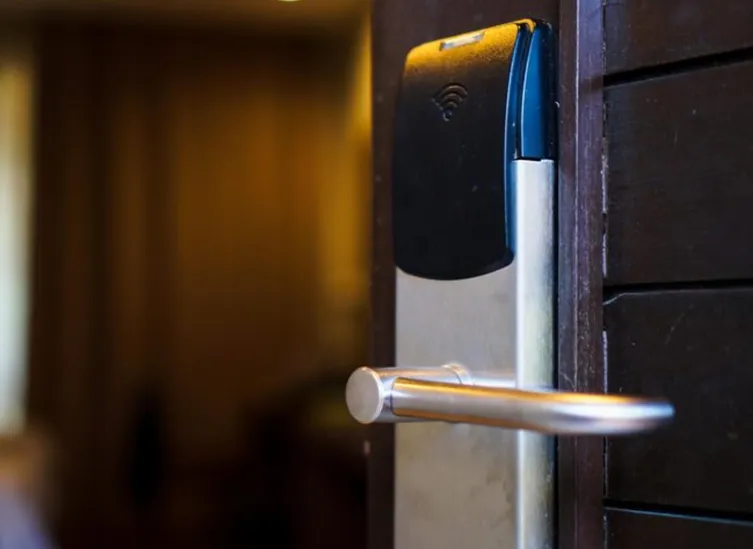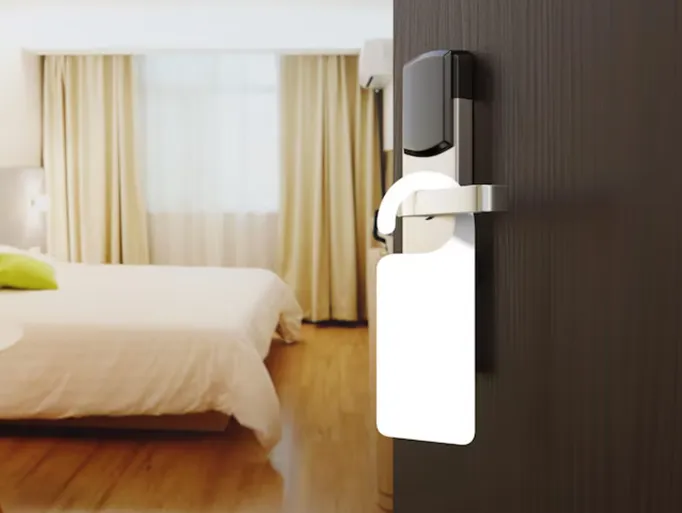

What Renovation Projects Actually Demand From an Electronic Hotel Lock Supplier
Renovation projects impose a different kind of pressure on procurement than new builds do. Timelines are compressed, existing infrastructure constrains your options, and any delay in lock delivery can stall an entire floor — or worse, push back a reopening date that’s already been communicated to guests. Sourcing an electronic hotel lock for renovation projects isn’t the same exercise as specifying hardware for a ground-up construction, and suppliers who don’t understand that distinction will cost you more than just money.
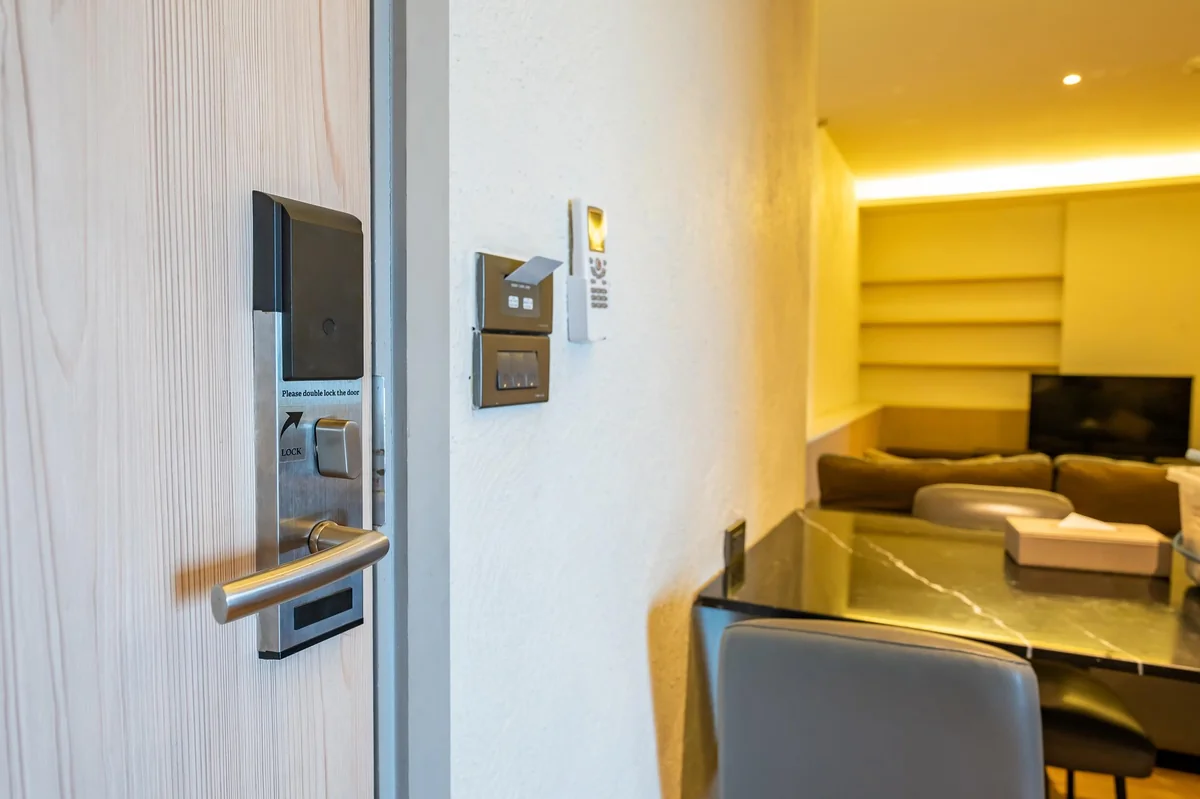
The first real test is retrofit compatibility. Most renovation scenarios involve legacy door prep — existing backset dimensions, cutout profiles, and door thicknesses that a supplier’s standard product may not accommodate without modification. A capable hotel room lock replacement supplier will have documented compatibility guides, offer multiple faceplate configurations, and be able to confirm fit against your door specs before a purchase order is raised. If a supplier can’t answer that question with specifics, that’s a signal worth paying attention to.
Beyond fit, procurement managers need to interrogate three operational variables before committing to any supplier:
- Lead time flexibility — renovation schedules shift. Suppliers should be able to confirm realistic production and shipping windows, and ideally hold buffer stock for fast-moving SKUs.
- Minimum order quantities — a phased renovation rolling out across floors or wings may require multiple smaller orders rather than one bulk shipment. Rigid MOQ structures create cash flow and storage problems.
- Certification coverage — locks must meet the fire egress, accessibility, and energy compliance standards of the jurisdiction. Asking for documentation upfront avoids costly substitutions mid-project.
There’s also the integration question — and this one trips up a lot of buyers. An electronic hotel lock for renovation projects often needs to work inside an existing property management system rather than a clean-slate deployment. That means the supplier’s encoder compatibility, card technology support, and software handshake protocols matter as much as the hardware itself. Suppliers who only sell the lock without addressing the system layer are leaving you to figure out a critical gap on your own.
What separates a transactional vendor from a genuine supply partner — in renovation contexts specifically — is the willingness to engage with project complexity early, not after the order is placed.
Hotel Room Lock Replacement Supplier Criteria: MOQ, Lead Times, and Retrofit Compatibility
Supplier selection for a renovation lock program operates under constraints that standard procurement frameworks often underestimate. Minimum order quantities are the first pressure point — most established manufacturers set MOQs that make sense for new-build volumes, not phased retrofit schedules where a property might need forty units this quarter and sixty more in six months. A hotel room lock replacement supplier worth engaging should offer staged release options or hold inventory against a blanket purchase order, rather than forcing procurement teams into a single oversized shipment that ties up capital and storage space.

Lead times deserve more scrutiny than they typically receive during vendor shortlisting. Standard quoted lead times assume clean order conditions — confirmed specifications, no custom finishes, no encoder pairing requirements. Renovation projects rarely meet those conditions. Finish matching to existing door hardware, custom credential encoding, and third-party PMS integration testing all add time that doesn’t appear in a supplier’s standard lead time figure. The realistic timeline is the quoted lead time plus integration validation, plus whatever buffer the installation contractor needs for sequenced room-by-room deployment.
Retrofit compatibility is where supplier capability gaps become expensive. Key evaluation criteria include:
- Backset and cross-bore dimensions — whether the lock body fits existing door prep without additional drilling or plate modifications
- Door thickness range — older hotel stock frequently falls outside the parameters assumed by locks designed for new construction
- Credential format flexibility — RFID, magnetic stripe, or mobile key support depending on what the property’s front desk system already uses
- Offline vs. online architecture — relevant when structured cabling upgrades are outside the renovation budget
Sourcing an electronic hotel lock for renovation projects without getting written confirmation on all four points is a common cause of mid-project substitutions — which cascade into schedule delays and renegotiated installation contracts.
The supplier conversation should also surface post-installation support terms. Warranty coverage that excludes installation-related faults, or firmware update policies that require paid service calls, shift ongoing costs onto the property in ways that distort the original procurement ROI calculation. These terms are negotiable at the sourcing stage. They are not negotiable after the order ships.
Certifications, Interoperability, and the Compliance Factors That Kill Renovation Timelines
Certification requirements don’t just affect product eligibility — they dictate procurement sequencing. A lock that clears internal approval but lacks the regional fire safety or accessibility compliance documentation required by the authority having jurisdiction can stall an entire renovation phase while alternative sourcing is arranged. For procurement teams working against a room-block deadline, that stall is measured in lost revenue, not just schedule days.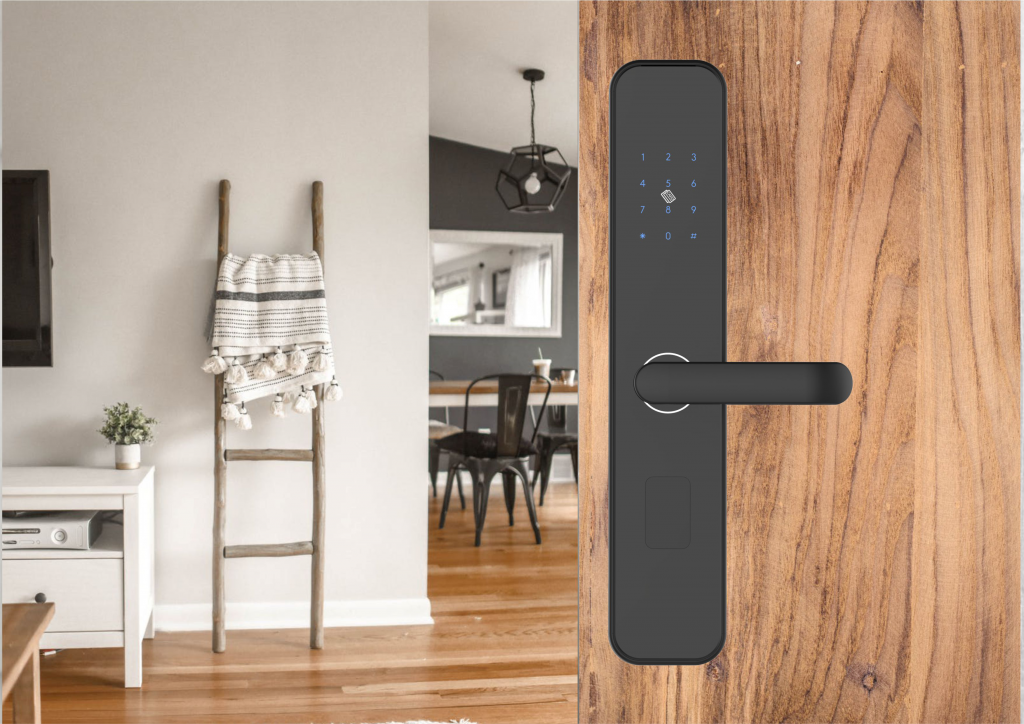 .
The compliance picture for an electronic hotel lock for renovation projects typically spans three distinct layers:
- Electrical and safety certifications (UL, CE, FCC, or regional equivalents depending on the installation market)
- Accessibility standards — ADA in North American projects, EN 17210 in European contexts — which govern handle force, reach range, and visual contrast on keypad surfaces
- Fire egress compliance, particularly relevant when the lock interfaces with a door that serves as a fire exit or connects to an emergency release system
Interoperability compounds the certification problem. A lock that is individually certified may still fail a system-level inspection if it cannot demonstrate validated integration with the property’s existing fire alarm panel or access control infrastructure. Suppliers who provide product certifications but cannot supply documented interoperability testing results leave the property owner carrying the compliance risk — which is a liability exposure that procurement contracts rarely make explicit until something goes wrong during the building inspection.
When evaluating any hotel room lock replacement supplier, the right question isn’t “is this product certified?” It’s “certified to which standard, in which jurisdiction, and does that certification extend to the integrated system configuration we’re installing?” Those are three different answers, and conflating them is how projects end up with approved products that fail final inspections.
Lead time interacts with all of this in ways that catch buyers off-guard. Certification documentation — especially for markets requiring localized testing — can add weeks to a supplier’s standard delivery window. Sourcing an electronic hotel lock for renovation projects without confirming document availability upfront means the physical hardware may arrive on schedule while the compliance paperwork is still pending, effectively making the product unusable until the file is complete.
Evaluating Long-Term Supplier Fit: Support Infrastructure, Warranty Terms, and Operational ROI
Post-installation is where supplier relationships either pay for themselves or quietly drain operational budgets. For procurement managers evaluating an electronic hotel lock for renovation projects, the hardware spec is only part of the equation — the support infrastructure wrapped around that hardware is what determines whether the total cost of ownership stays predictable over a three-to-five-year horizon.
Start with warranty structure. A standard one-year parts warranty looks reasonable on paper until a component failure occurs in month fourteen and the replacement cost lands entirely on the property. The better benchmark is a tiered warranty that covers the lock mechanism, the credential reader, and the management software integration separately — because these components age at different rates and fail for different reasons. Ask suppliers to specify exactly what voids coverage, particularly around third-party PMS integrations, since renovation projects frequently involve mixed-vendor environments.
Technical support access is another variable that procurement often underweights. Remote diagnostics capability, dedicated account contacts, and documented SLA response windows for critical failures — these matter considerably more during a phased renovation than during a standard new-build, where commissioning happens all at once. When floors are going live incrementally, a slow support response to one floor’s lock fault can cascade into front desk bottlenecks across the property.
- Confirm whether the supplier offers on-site commissioning support or only remote guidance.
- Verify spare parts availability and lead times for components outside standard warranty coverage.
- Clarify firmware update protocols — specifically whether updates are pushed automatically or require scheduled downtime.
- Ask whether the hotel room lock replacement supplier provides staff training materials, or whether that cost is scoped separately.
Operational ROI, ultimately, is calculated across the full deployment lifecycle — not the purchase order. A supplier with a slightly higher unit price but documented uptime rates, a responsive support model, and clear upgrade paths for credential technology will typically outperform a lower-cost alternative that requires expensive third-party intervention for routine issues. Procurement decisions made purely on acquisition cost tend to surface their real price tag eighteen months into operation.
Conclusion
Supplier support isn’t a nice-to-have — it’s the thing that determines whether your renovation actually holds up two years out.
Choosing the right electronic hotel lock for renovation projects comes down to one honest question: what happens after installation? Uptime records, firmware transparency, and parts availability matter more than the per-unit price on the quote sheet. A cheaper lock that needs expensive outside help to update its credentials isn’t a bargain — it’s a slow drain on the operational budget you just rebuilt.
Get the support commitments in writing before you sign anything.
Frequently Asked Questions
Q: What should I look for when choosing an electronic hotel lock for renovation projects?
A: Retrofit compatibility is the first filter — most renovation projects can’t afford to re-route wiring or reframe door cutouts, so the lock needs to fit existing prep work without major carpentry. Beyond the physical fit, look hard at credential flexibility (RFID, mobile key, PIN), firmware update processes, and what the supplier’s post-installation support actually looks like on paper.
Q: How long does it typically take to install electronic hotel locks during a renovation?
A: Per-door installation time varies widely depending on existing hardware and door condition, but experienced installers working on a standard renovation generally average somewhere between 20 and 45 minutes per door once the prep work is done. Factor in PMS integration testing and staff credential setup — those steps often take longer than the physical install itself.
Q: Can I keep existing door hardware when upgrading to an electronic hotel lock for a renovation project?
A: Sometimes, but don’t assume. Many electronic lock systems require a specific backset, door thickness range, or cutout dimension that may conflict with legacy hardware. Get exact specs from the manufacturer before committing — a single incompatible door profile across 80 rooms is an expensive surprise.
Q: How much does an electronic hotel lock for renovation projects typically cost per door?
A: Unit pricing varies considerably by credential type, build quality, and whether the system includes a management hub or cloud subscription — but budget-tier locks and enterprise-grade systems can sit at very different price points, and the gap widens once you account for installation labor, PMS integration, and ongoing maintenance. The per-unit quote rarely tells the full story; total cost of ownership over three to five years is the number that actually matters.
Q: Why do electronic hotel locks fail more often after renovation than in new builds?
A: Renovated doors often carry hidden variables — slight warps, inconsistent door gaps, or legacy frames that flex under load — that put mechanical stress on lock components not designed for those tolerances. New-build installations happen on controlled, purpose-spec’d doors; renovation installs inherit whatever the previous decade left behind.
Q: Is it worth upgrading to mobile key capability during a hotel renovation?
A: For most mid-scale and above properties, the answer is yes — but the real question is whether your PMS and front-desk workflow are ready to support it, because a mobile key system running on a clunky integration creates more friction than it solves. Renovations are genuinely the right moment to make this move, since pulling it apart and retrofitting later costs significantly more in both downtime and labor.
Q: How do I make sure an electronic hotel lock for renovation projects stays compatible as software updates roll out?
A: Ask the supplier directly for their firmware update roadmap and whether updates require on-site technicians or can be pushed remotely — that distinction alone separates manageable systems from expensive ones. Get the compatibility guarantee in writing, specifically covering how long the hardware will receive support after purchase.
Q: What’s the biggest mistake hotels make when sourcing an electronic hotel lock for renovation projects?
A: Optimizing for the lowest acquisition price without evaluating supplier support depth — it’s the single most common procurement error in this category, and it tends to show up as avoidable downtime and out-of-pocket service calls 18 months after the ribbon-cutting. A lock is only as good as the ecosystem behind it.