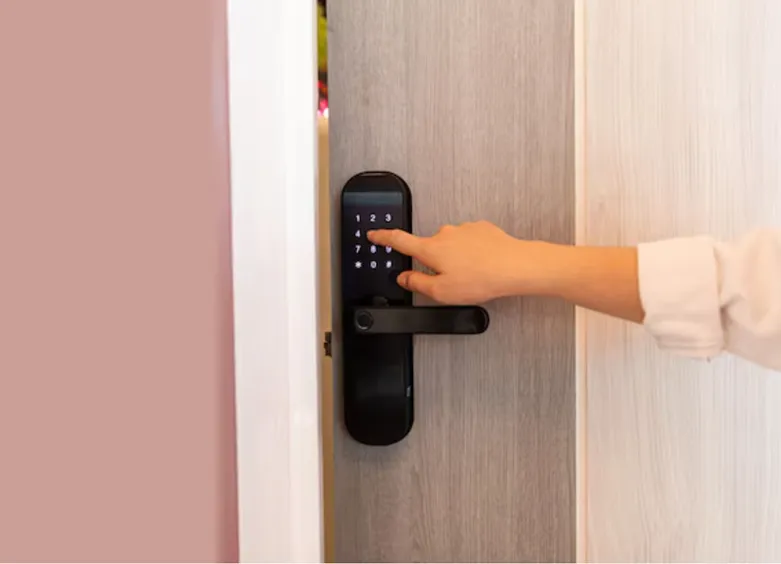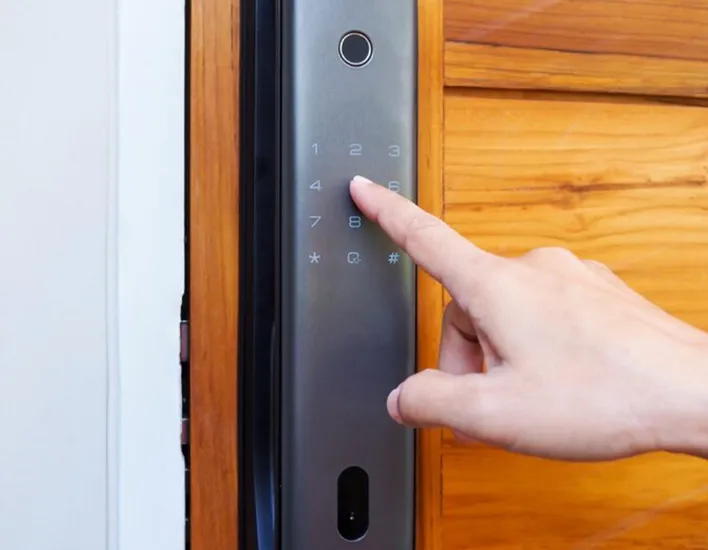

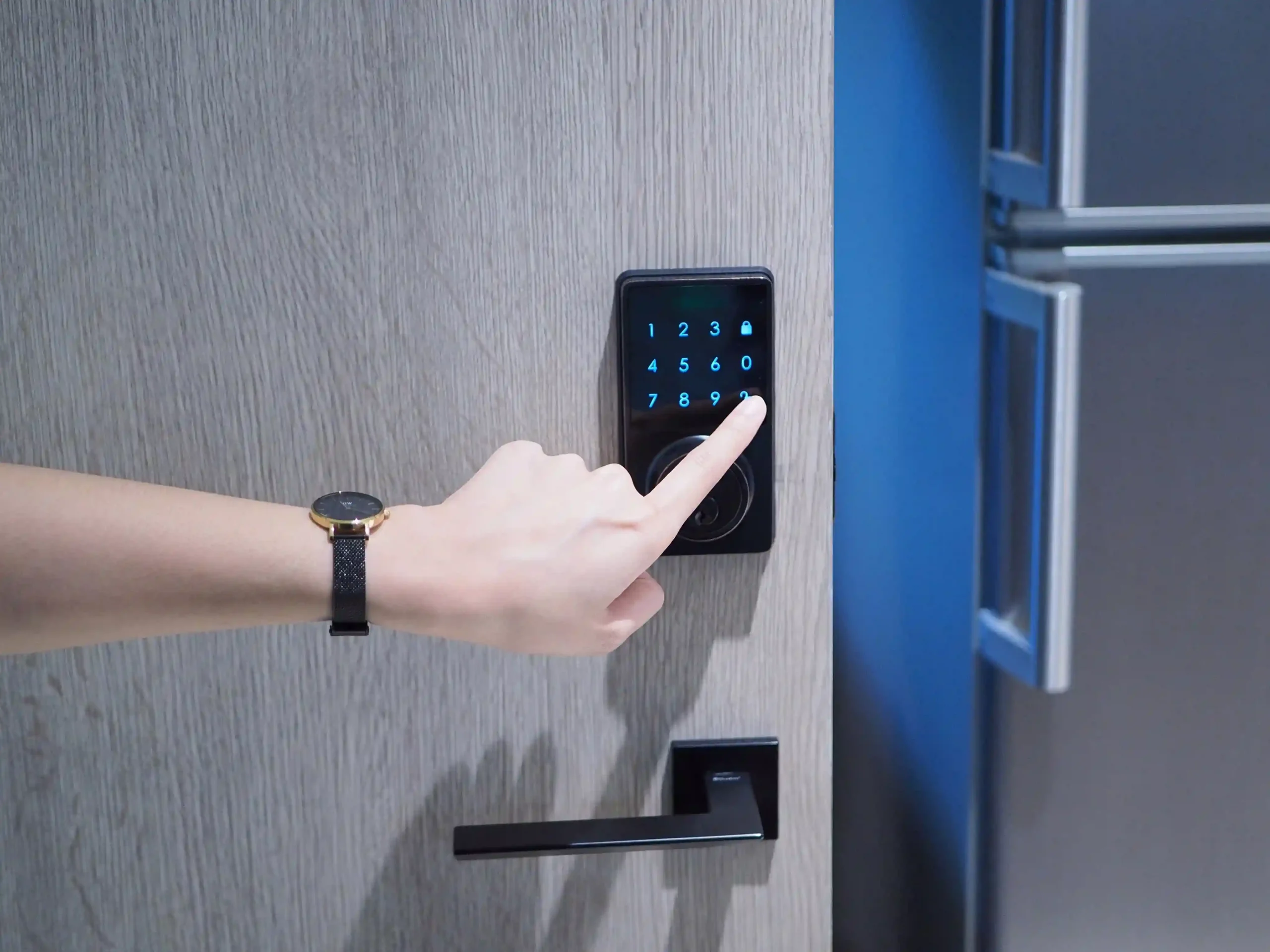
What to Look for in a Bluetooth Door Lock OEM Supplier (Before You Sign Anything)
Picking the wrong manufacturing partner at this stage doesn’t just create product headaches — it creates contractual ones. And those are a lot harder to untangle. Before a single purchase order gets signed, procurement teams need to pressure-test any potential Bluetooth door lock OEM supplier across several dimensions that go well beyond price per unit.
Start with certifications. Any supplier shipping product into North American or European markets needs to show compliance with relevant standards — FCC, CE, RoHS at minimum. Ask for that documentation upfront. Not after sampling. A supplier who hesitates to produce current certification records is already telling you something important about how they handle compliance when things get complicated downstream.
Production capacity and lead time transparency matter more than most buyers expect going in. A supplier might quote a competitive unit price but quietly operate at a scale that can’t absorb a mid-season volume spike. Get clarity on their monthly output ceiling, their current utilization rate, and — this one’s important — how they actually handle orders that exceed standard capacity. These aren’t hostile questions. They’re basic supply chain hygiene.
- Firmware ownership and update protocols — who controls the codebase, and what happens to your product if the relationship ends?
- Minimum order quantities for initial runs versus reorders — some suppliers set aggressive MOQs on custom SKUs
- App integration support — especially if the supplier’s platform needs to connect with third-party access control systems or property management software
- Packaging and branding flexibility — critical if you’re pursuing a Bluetooth smart lock private label arrangement where brand consistency is non-negotiable
- Quality control processes — ask specifically about their defect rate benchmarks and whether third-party audits are on the table
And then there’s the IP question. When you’re sourcing from a Bluetooth door lock OEM supplier for a branded product line, the intellectual property terms buried in your manufacturing agreement can define whether you actually own your product or just rent it. Who owns the industrial design? Who owns the firmware modifications made during customization? These aren’t legal formalities — they’re commercial pressure points that determine whether you can switch suppliers later without losing your product entirely.
Due diligence here isn’t optional. It’s the difference between a supplier relationship that scales with your business and one that quietly traps you inside it.
Why App Control and Firmware Ownership Define Your Private Label’s Long-Term Value
App control is where a Bluetooth smart lock private label either earns its margin or quietly bleeds it. Buyers who treat the mobile app as a secondary feature — something to sort out after the hardware specs are locked — tend to find out the hard way. Usually after launch. Usually when customer complaints are stacking up and the supplier’s dev team is slow to respond, expensive to bring in, or just… gone.
The commercial stakes are real. A Bluetooth door lock OEM supplier who holds ownership of the app’s core codebase — or runs the backend infrastructure under their own accounts — has serious power over your brand. If the relationship goes sideways, or if they bring on a direct competitor using the same platform, your differentiation is gone overnight. So the question to ask any prospective supplier isn’t just “can we white-label the app?” It’s: who owns the source code, who controls the cloud backend, and what happens to both if we walk away?
Firmware ownership follows the same logic. Customizations built during development — access scheduling, encryption protocols, integration hooks for property management systems — represent real engineering work. Without a contract that explicitly assigns those modifications to your company, they stay the supplier’s asset. That’s a structural risk. Not a hypothetical one.
- Get a written breakdown of which firmware components are proprietary to the supplier versus open or assignable to you
- Find out whether the mobile app runs on a shared platform serving multiple OEM clients, or was built specifically for your product line
- Push for source code escrow arrangements — especially if the supplier operates in a jurisdiction where IP enforcement is patchy at best
- Lock update and maintenance SLAs into the contract itself, not just the sales pitch
Look, long-term brand value in the smart access category comes down to controlling the full software stack — not just the industrial design. A private label product running on a supplier-controlled app is, commercially speaking, a product you’re renting rather than owning. That distinction matters enormously when you’re sizing up supplier relationships against a multi-year growth horizon.
Device-Binding Architecture: The Technical Spec Most Bluetooth Smart Lock Private Label Buyers Overlook
Device-binding architecture sits quietly in the technical specification sheet — usually somewhere between the wireless range rating and the battery life estimate — and most procurement teams skip right past it. That’s a mistake worth understanding before you finalize any Bluetooth door lock OEM supplier relationship.
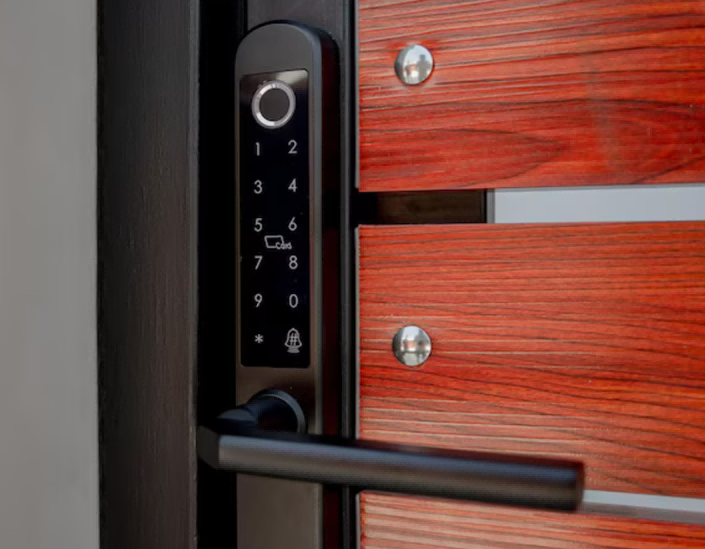
Here’s what the spec actually controls: whether a given lock unit can be paired with any authorized mobile credential, or whether it’s permanently bound to a specific device ID at the firmware level. The distinction sounds minor. Operationally, it isn’t.
Single-device binding — where each lock authenticates only against a fixed, registered phone or credential token — is common in consumer-grade architectures because it simplifies the pairing flow. But in commercial deployments, that rigidity creates real friction. Staff turnover, device replacements, multi-user access scenarios — all of these become administrative problems rather than software settings. A Bluetooth smart lock private label product sold into hospitality, co-working, or facilities management channels cannot carry that limitation without serious downstream complaints.
What to audit before you commit to a supplier:
- Whether the binding logic lives in firmware (harder to modify post-production) or in the cloud access layer (configurable without a hardware revision)
- How the supplier handles credential revocation — specifically, whether revoked devices are blocked at the lock level or only at the app/server level, which creates a security gap if connectivity drops
- Whether multi-admin credential structures are supported natively, or require a workaround that adds integration complexity
- How binding behavior is documented in the technical spec versus how it actually performs in field conditions — these don’t always match
A capable Bluetooth door lock OEM supplier will have clear, written answers to all of the above — and the firmware documentation to back them up. Vague responses about “flexible architecture” without specifics on binding protocol are a signal worth taking seriously. The suppliers who’ve genuinely built for commercial-scale deployment understand that credential management isn’t an edge case. It’s the use case.
Certifications, MOQ, and Lead Times: The Operational Side of Sourcing a Bluetooth Door Lock OEM Partner
Operational compatibility — certifications, minimum order quantities, and lead time structures — is where a lot of sourcing decisions quietly fall apart. A supplier can have impressive firmware and clean hardware specs, and still create downstream problems if their compliance documentation doesn’t match your target market or their production calendar doesn’t align with your launch window.
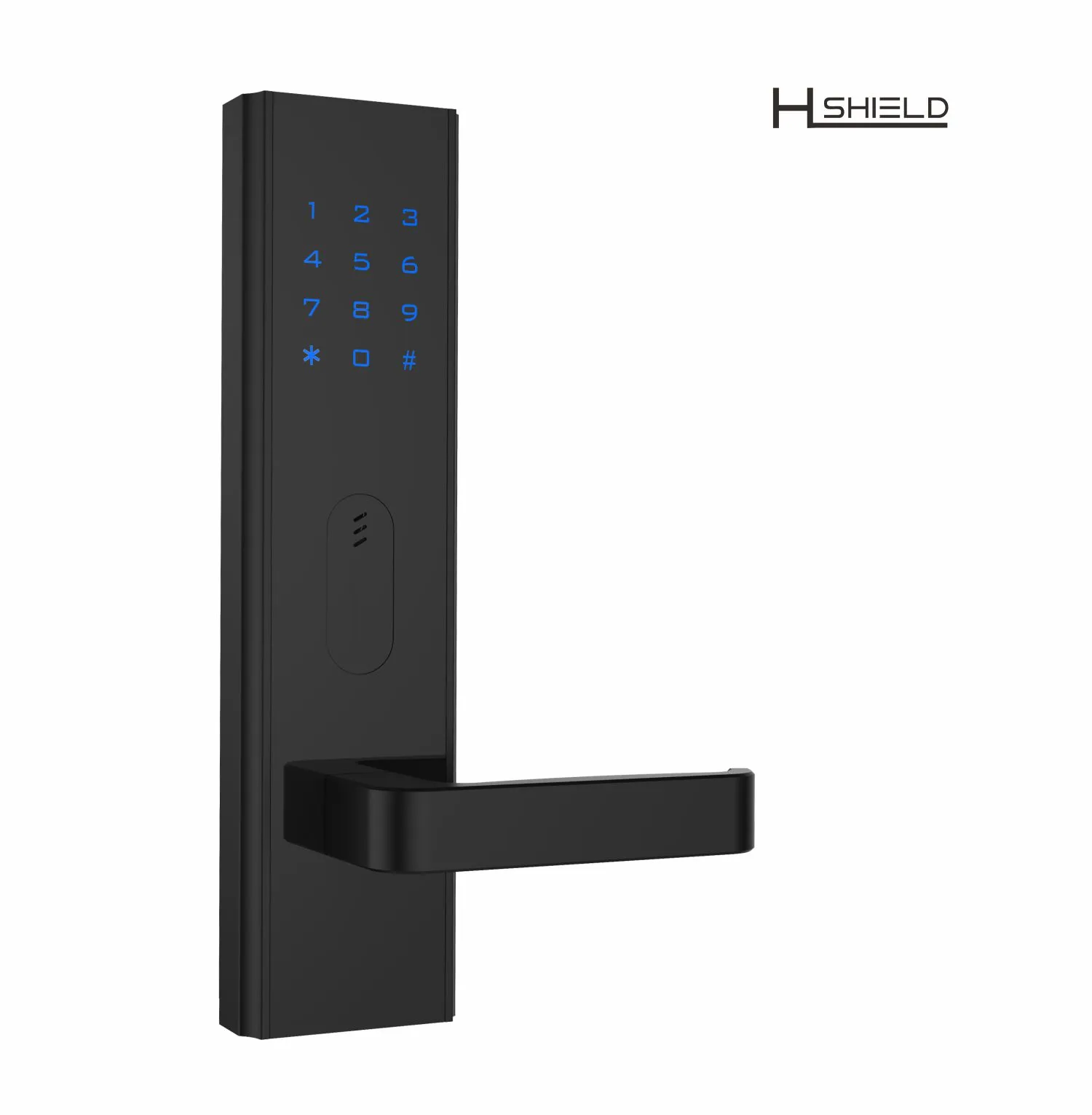
On the certification side, the baseline requirements depend heavily on where the product ships. FCC and IC cover North American markets; CE handles EU; RCM for Australia. But for a Bluetooth door lock OEM supplier serving commercial or hospitality channels, you’ll also want to ask about BQB (Bluetooth Qualification Body) certification — this is specific to the Bluetooth stack itself and is separate from regional radio frequency approvals. Suppliers who’ve skipped BQB certification on their modules are technically in violation of Bluetooth SIG licensing terms, which creates IP and compliance exposure for the buyer downstream. Verify it. Don’t assume.
- Regional RF certifications (FCC, CE, RCM, MIC) — confirm which are already held versus available on request
- BQB certification for the Bluetooth module or stack
- ISO 9001 or equivalent quality management documentation
- UL or EN grade certifications if the product is marketed for fire-rated or high-security door applications
- Any smart home ecosystem certifications (Matter over Bluetooth LE is an emerging ask in some commercial segments)
MOQ structures vary more than buyers expect. Some suppliers — particularly those positioned for Bluetooth smart lock private label programs — offer tiered MOQs that drop significantly after a first qualifying order, which can matter a lot for brands testing a new SKU before committing to volume. Others hold firm at high minimums regardless of order history. Neither model is inherently better, but it has to align with your inventory risk tolerance and cash flow cycle.
Lead times deserve a direct conversation, not just a spec sheet figure. Standard production lead times quoted at eight to twelve weeks can stretch considerably if the supplier is managing component shortages or running parallel OEM programs for other clients. Ask specifically about the lead time for your configuration — not the base model — and get a written commitment on safety stock availability if you’re planning a phased regional rollout.
Conclusion
Picking the right Bluetooth door lock OEM supplier comes down to two things that most buyers underweight: MOQ flexibility and honest lead time conversations — not the polished number on a spec sheet, but the real number for your exact configuration, in writing.
Don’t let a low unit price pull you into a supplier relationship that can’t scale with your rollout timeline or absorb a component crunch without wrecking your launch window.
Get the written commitments before you sign anything. That’s the whole job.
Frequently Asked Questions
Q: What does a Bluetooth door lock OEM supplier actually do differently from a standard lock manufacturer?
A: A Bluetooth door lock OEM supplier builds the hardware to your specifications — your branding, your firmware requirements, your enclosure design — rather than selling you a finished product off a shelf. The distinction matters because you’re not just buying locks; you’re buying a manufacturing partner who can integrate your app SDK, adjust the BLE protocol stack, and hold inventory under your label. Standard manufacturers optimize for their own catalog. OEM suppliers optimize for yours.
Q: How much does it cost to start an OEM program with a Bluetooth door lock supplier?
A: Tooling and NRE (non-recurring engineering) fees typically run anywhere from a few thousand to tens of thousands of dollars depending on how much custom work is involved — a new enclosure mold alone can be significant. Beyond that, unit pricing drops substantially as order volume climbs, so your per-lock cost at 500 units looks very different from your cost at 5,000. Always separate tooling costs from unit costs in the quote so you’re comparing apples to apples across suppliers.
Q: How long does it take to get a first production run from a Bluetooth door lock OEM supplier?
A: For a configuration that requires meaningful customization — firmware adjustments, custom housing, or co-branded packaging — expect somewhere between 10 and 20 weeks from confirmed order to shipped goods, though that window can stretch during component shortages. The base model lead time a supplier quotes in their brochure is almost never the number that applies to your specific build. Get the lead time for your exact configuration in writing before you plan your launch timeline around it.
Q: What certifications should a Bluetooth door lock OEM supplier already have in place?
A: At minimum, look for Bluetooth SIG certification (confirming BLE compliance), plus whatever regional safety and EMC certifications apply to your target markets — FCC for North America, CE for Europe, and RoHS for environmental compliance are the baseline. If the supplier doesn’t already hold these on their core platform, you’ll be absorbing both the cost and the timeline of getting them, which can add months. Ask specifically whether certifications transfer to your OEM variant or require re-testing.
Q: Can I use my own mobile app with a Bluetooth door lock OEM supplier’s hardware?
A: Most reputable Bluetooth door lock OEM suppliers offer SDK documentation that lets your development team integrate the lock’s BLE communication layer into a proprietary app — but the depth of that integration varies a lot. Some suppliers provide clean, well-documented SDKs; others hand you a sparse PDF and call it support. Before you commit, ask for the SDK in advance and have a developer review it. A clean SDK is genuinely one of the most underrated differentiators between suppliers.
Q: Why do Bluetooth door lock OEM supplier MOQs vary so much between factories?
A: MOQ is largely a function of how a factory structures its production runs and manages component procurement — a supplier running high-volume consumer programs needs large batches to justify line changeovers, while a more specialized OEM-focused operation may accept smaller runs because their margins account for it. A very low MOQ isn’t automatically a green flag; it can mean the supplier is struggling for volume or cutting corners on component quality to stay flexible. The right MOQ is the one that matches your actual rollout pace without locking you into inventory you can’t move.
Q: How do I verify that a Bluetooth door lock OEM supplier is legitimate and not a trading company?
A: Request a factory audit — either in person or through a third-party inspection service — and ask for the supplier’s business license, which will indicate whether they’re a manufacturer or a trading intermediary. Trading companies aren’t inherently bad, but they add a margin layer and often have less control over production timelines and quality decisions. The clearest signal of a genuine Bluetooth door lock OEM supplier is direct access to their engineering team during pre-sales conversations, not just a sales rep reading from a spec sheet.
Q: Is it worth choosing a Bluetooth door lock OEM supplier overseas versus a domestic one?
A: Overseas suppliers — particularly in manufacturing hubs with established electronics ecosystems — often offer significantly lower unit costs and broader component access, but that advantage comes with longer shipping lead times, potential tariff exposure, and communication overhead that can slow down engineering iterations. Domestic suppliers typically cost more per unit but can compress your development cycle and reduce supply chain risk — which has real dollar value if a delayed launch costs you a contract. The right answer depends on your volume, your timeline pressure, and how much buffer you have for things going sideways.