


What to Verify Before Sourcing App Controlled Door Locks at Wholesale Volume
Sourcing app controlled door lock wholesale isn’t a decision you finalize after a single product catalog review. The variables that determine whether a bulk order delivers operational value — or creates a costly compliance headache — run deeper than unit price and lead time. Procurement teams that skip the verification stage typically discover the gaps after inventory has landed.
Certification status is the first hard filter. Any mobile app door lock bulk supplier operating in reputable export markets should be able to produce documentation for the relevant regional standards — UL listings for North American distribution, CE marking for European markets, and where applicable, specific fire egress or building code certifications that govern commercial installation environments. Ask for the actual certificates, not just a checkbox on a spec sheet. Expired or unverifiable documentation is a red flag that surfaces regularly at this volume level.
Beyond compliance, the connectivity architecture deserves scrutiny before any purchase order is signed. App controlled door lock wholesale products vary significantly in how they handle authentication — Bluetooth-only, Wi-Fi bridge dependent, Z-Wave, or hybrid protocols — and the wrong protocol choice can create real integration friction for property managers or facility operators deploying at scale. Confirm whether the supplier’s companion app is proprietary or compatible with third-party platforms like building management systems or access control software already in use by your end clients.
- Request firmware update policy documentation — how often are updates pushed, and who controls the deployment schedule?
- Clarify MOQ thresholds and whether tiered pricing applies across different SKU configurations (deadbolt, handleset, padlock variants).
- Confirm warranty terms at commercial volume — consumer-grade warranty language often doesn’t hold for bulk B2B transactions.
- Ask for sample units before committing to full order quantities; test app pairing stability, response latency, and physical build tolerances.
- Verify the supplier’s production lead times against your distribution timeline, especially if seasonal demand or project deadlines are involved.
One operational detail that often gets overlooked — battery life performance under high-traffic conditions. A lock rated for residential use may cycle through battery replacements far faster in a commercial environment. That maintenance cost compounds across a large deployment in ways that erode the margin advantage of a competitive unit price.
Mobile Compatibility Standards Your Mobile App Door Lock Bulk Supplier Must Meet
Mobile compatibility isn’t a feature checkbox — it’s the operational backbone of any app controlled door lock wholesale program. A lock that pairs cleanly on one device but throws errors on another creates support overhead that scales badly across a distributed deployment. Before committing volume to any mobile app door lock bulk supplier, procurement teams need to pressure-test the compatibility claims, not just read them off a spec sheet.
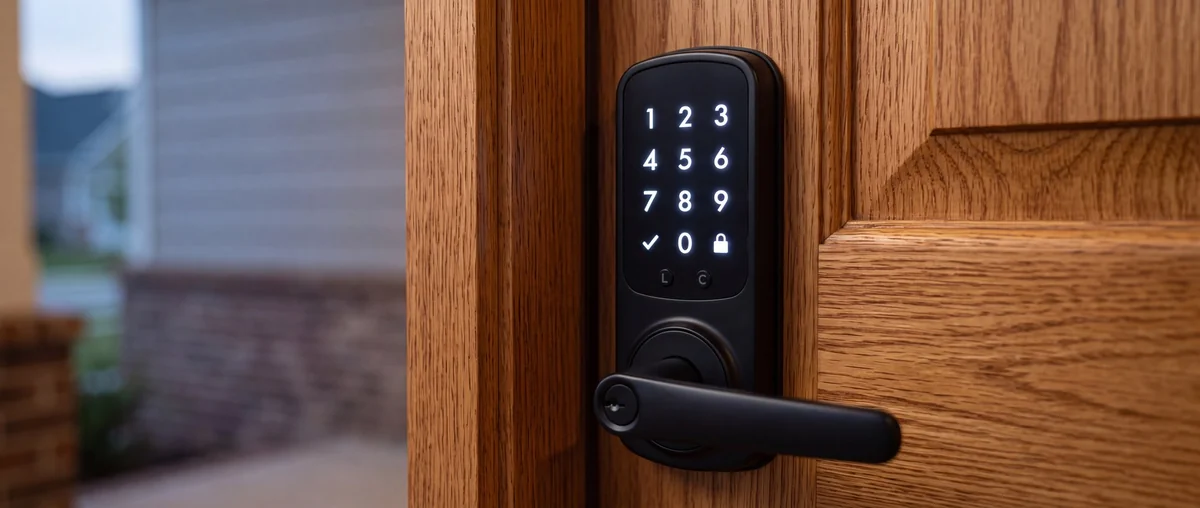
The first thing to establish is OS version coverage. A supplier claiming “iOS and Android compatible” tells you almost nothing useful. What matters is the minimum supported OS version, how frequently the companion app receives updates, and whether those updates are backward-compatible with older firmware already deployed in the field. A mismatch between app and firmware versions across a large install base is a maintenance problem that arrives months after the purchase order is signed.
- Confirm Bluetooth and Wi-Fi protocol versions — BLE 5.0 or higher is the current commercial baseline for reliable low-latency performance.
- Ask whether the app operates in offline mode, or whether it requires a live connection for every access event. This matters significantly in buildings with inconsistent network coverage.
- Verify multi-user permission tiers within the app — enterprise deployments require granular access control, not just admin versus guest.
- Request documentation on API availability if your buyer is integrating locks into a broader property management or access control platform.
- Check app store ratings and update frequency as a proxy for ongoing software support — an app that hasn’t been updated in over a year is a red flag in a fast-moving category.
Geofencing and remote management features deserve specific scrutiny. Some suppliers list these as standard, but they’re tied to subscription-based cloud infrastructure — meaning the per-unit cost you’re evaluating at the wholesale stage doesn’t reflect total cost of deployment. That distinction needs to surface during supplier negotiation, not after onboarding.
Cross-device testing should also be part of any sample evaluation process. Run the lock pairing sequence across a range of device models and OS versions that reflect your end-user base. Compatibility gaps that appear only on mid-range Android hardware — common in hospitality and workforce housing deployments — won’t show up in a demo environment built around flagship devices.
Account Handover Protocols That Protect Your Business When Contracts Change
Contracts end. Suppliers get acquired. Procurement cycles reset. The operational risk that rarely gets flagged during initial sourcing discussions is what happens to your deployed locks — and the accounts tied to them — when any of those things occur. For buyers operating at scale in the app controlled door lock wholesale space, this isn’t a hypothetical edge case. It’s a transition planning requirement.

The core issue is account architecture. Most app-based lock systems tie device registration, access permissions, and audit logs to a vendor-managed cloud account. If that account belongs to your supplier — or worse, was set up under a representative’s personal credentials during onboarding — you may not have clean administrative control when the relationship changes. Before finalizing any bulk order, procurement teams should confirm in writing who holds the master admin credentials, how account ownership transfers, and what the documented process looks like for migrating device associations to a new account environment.
- Request a written account handover procedure as part of your supplier agreement — not a verbal commitment, a documented protocol.
- Confirm whether device firmware and access credentials can be reset without requiring supplier-side authorization.
- Establish whether audit log data is exportable in a standard format, and who retains access to historical records post-contract.
- Clarify whether the app platform supports multi-tenant account structures, which simplifies handovers in property management or franchise deployments.
Any credible mobile app door lock bulk supplier should be able to walk procurement teams through this process before an order is placed — not after a contract dispute surfaces. Suppliers who deflect these questions or treat them as uncommon are signaling something about how they’ve structured their platform dependency model.
The deeper commercial consideration here is lock portability. Some app controlled door lock wholesale arrangements lock hardware to proprietary ecosystems in ways that make supplier switching genuinely costly — not because the physical hardware fails, but because the account migration path doesn’t exist. That’s a contractual risk, not a technical one. Building handover terms into the initial supplier agreement is the cleaner move.
Wholesale Support Checklist: Certifications, Lead Times, and After-Sale Commitments for App Controlled Door Lock Orders
Procurement teams that have moved past supplier shortlisting need a structured way to pressure-test commitments before a purchase order is signed. App controlled door lock wholesale sourcing carries a distinct set of due-diligence requirements that go beyond standard hardware procurement — because the product is only as reliable as the software layer running behind it, and the supplier relationship has to reflect that.
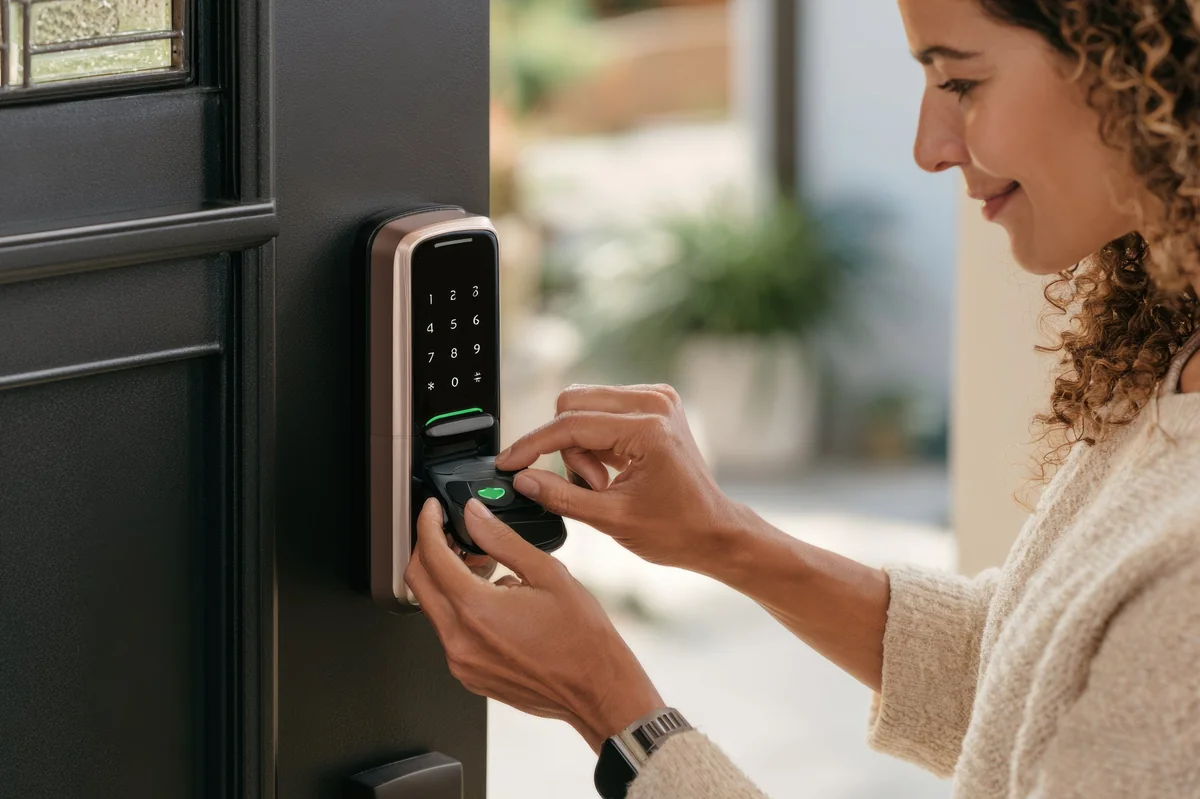
- Certifications: Confirm regional compliance credentials relevant to your deployment markets — electrical safety, wireless transmission, and data privacy certifications vary significantly across North America, Europe, and Asia-Pacific. Ask for documentation, not just verbal confirmation.
- MOQ flexibility: Pilot-phase orders and full deployment orders have different economics. A credible mobile app door lock bulk supplier should offer tiered MOQ structures rather than a single rigid threshold that forces buyers into over-commitment at the testing stage.
- Lead times — standard vs. custom: Standard SKUs and custom-firmware or custom-branded units carry very different production timelines. Get both in writing, with buffer clauses for component delays built into the agreement.
- Warranty scope: Hardware-only warranties are increasingly inadequate for connected lock products. Confirm whether the warranty covers app functionality, firmware update failures, or remote access failures — not just physical defect.
- After-sale support tiers: Define response time expectations for critical failures, firmware rollback support, and escalation contacts. A supplier that can’t articulate its support tiers during sales conversations is unlikely to perform better after a problem surfaces.
- Replacement parts and EOL commitments: End-of-life planning matters in multi-year deployments. Ask how long replacement components and firmware support will remain available after a product line is discontinued.
The after-sale commitment question is where many app controlled door lock wholesale arrangements reveal their actual risk profile. Short warranty windows, vague support language, and the absence of SLA documentation aren’t minor oversights — they represent real operational exposure for buyers managing large-scale or long-duration installations.
Building this checklist into the RFQ process, rather than the post-contract review, shifts the negotiating position considerably. Suppliers who can answer these questions clearly, with documentation, are structurally different from those who can’t — and that difference compounds over the life of a deployment.
Conclusion
The supplier vetting process is the product — full stop. In app controlled door lock wholesale, what you’re actually buying is a long-term operational relationship, and a cheap unit price means nothing if you’re stuck chasing support tickets six months into a deployment with no SLA to stand on.
Documentation answers the question before the problem does. If a supplier can’t hand you warranty terms, firmware roadmaps, and EOL commitments upfront, that’s not a gap to negotiate around — it’s a signal.
Get the checklist into the RFQ, not the post-mortem.
Frequently Asked Questions
Q: What is app controlled door lock wholesale, and how is it different from buying retail?
A: App controlled door lock wholesale means purchasing smart locks — units that are managed and unlocked via a mobile application — in bulk quantities directly from a manufacturer or distributor, typically at tiered pricing that drops per unit as volume increases. The real difference isn’t just price; it’s access to OEM customization, firmware configuration options, and dedicated account support that retail buyers never see. Retail gets you a box. Wholesale gets you a relationship with the supply chain.
Q: How much does app controlled door lock wholesale typically cost per unit?
A: Per-unit pricing varies widely depending on connectivity type (Bluetooth-only units run cheaper than Wi-Fi or Z-Wave models), build quality, and order volume — but wholesale buyers generally see meaningful price breaks starting somewhere in the dozens of units, with deeper discounts at higher tiers. Factor in not just the unit cost but also the per-device app licensing fees some suppliers charge on an ongoing basis, because those can quietly erode your margin over a large deployment.
Q: How do I find reliable app controlled door lock wholesale suppliers?
A: Start with trade directories, industry expos, and B2B sourcing platforms — but don’t stop at a supplier listing. The filter that matters is documentation: a supplier worth working with can produce warranty terms, firmware update schedules, and end-of-life policies before you sign anything. Any supplier who hedges on those upfront is telling you something important about how they’ll behave when something goes wrong at scale.
Q: What certifications should app controlled door locks have before I buy wholesale?
A: At minimum, look for FCC and CE marks (depending on your target market), and for locks going into commercial or multifamily deployments, ANSI/BHMA grade ratings matter — Grade 2 for light commercial, Grade 1 for anything high-traffic. If the app communicates over Wi-Fi or Bluetooth, the firmware stack should also comply with relevant wireless certification standards. Missing certifications aren’t a minor paperwork issue; they’re a liability in a commercial deployment.
Q: Can I white-label or custom-brand app controlled door locks when buying wholesale?
A: Many manufacturers offer OEM and ODM arrangements — meaning you can sell the hardware under your own brand, sometimes with a co-developed or rebranded app. The catch is that white-label agreements often come with minimum order quantities that are significantly higher than standard wholesale thresholds, and app customization (custom UI, your own backend integration) typically costs extra. Get the full scope of what “white-label” actually includes in writing before you commit.
Q: Why do firmware update policies matter when sourcing app controlled door lock wholesale?
A: Because a smart lock is only as secure as its last firmware patch — and if a supplier abandons a product line, you’re left managing a fleet of devices with unpatched vulnerabilities and no recourse. In an app controlled door lock wholesale context, you’re not buying one lock; you’re potentially deploying hundreds, which means a supplier’s firmware roadmap and end-of-life commitment directly affects your operational risk for years. Ask specifically: how long is firmware support guaranteed post-purchase, and what happens when the app’s backend infrastructure changes?
Q: How long does it typically take to receive a wholesale order of app controlled door locks?
A: Lead times depend heavily on whether units are in stock or being manufactured to order — stock orders from domestic distributors might ship within days, while factory orders (especially with custom configurations) often run six to fourteen weeks. Build buffer time into any project timeline, and confirm in writing whether your quoted lead time includes app provisioning, firmware pre-loading, or any configuration work the supplier handles before shipping.
Q: Is it worth buying app controlled door locks wholesale for a small property portfolio?
A: The economics shift depending on how many doors you’re actually outfitting — wholesale pricing structures rarely favor buyers who need fewer than a couple dozen units, and the added complexity of supplier vetting, firmware management, and app administration can outweigh the per-unit savings at small scale. That said, if you’re planning to grow, establishing a wholesale supplier relationship early — even on a modest first order — puts you in a much better position when volume increases and renegotiation becomes viable.