
What Property Developers Actually Need in a Fingerprint Lock for Apartment Tenders
Property developers sourcing at scale face a fundamentally different set of pressures than a single building owner swapping out one lock. Tender specifications demand consistency across dozens — sometimes hundreds — of units, which means the evaluation criteria for a fingerprint lock for apartment projects has to go well beyond basic feature comparisons. What works fine in a showroom demo can fall apart completely when you’re rolling out across a 200-unit residential tower with multiple contractors, staggered handover dates, and a facilities team that needs to manage access from day one.
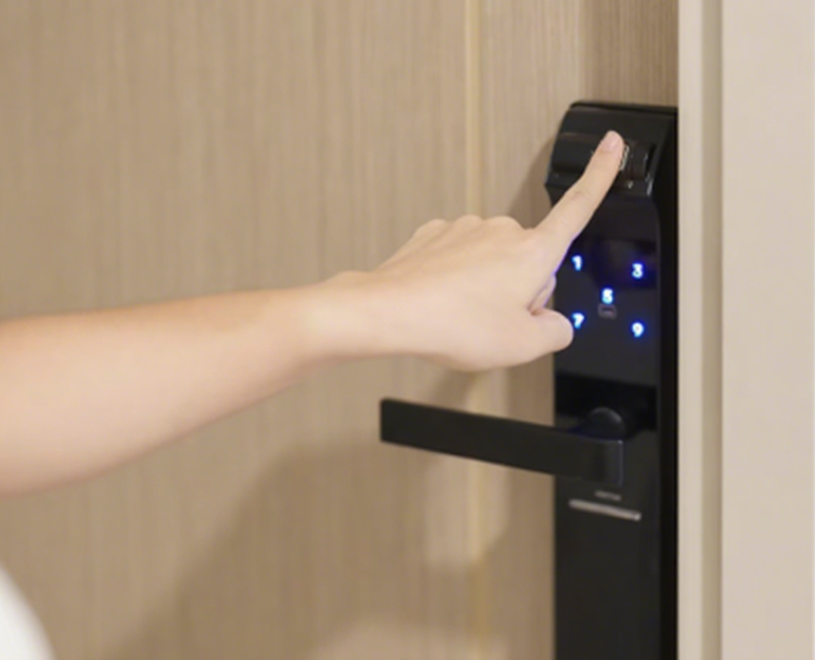
The first thing procurement managers tend to underweight is backend integration. A fingerprint door lock for property developers isn’t just a door fitting — it’s a node in a building’s broader access control ecosystem. Does the lock support centralized credential management? Can master access be provisioned and revoked remotely, or does someone have to physically touch every unit? These aren’t edge-case questions. They’re operational realities that surface within the first week of a building going live.
Certification compliance is non-negotiable on most tenders. Depending on the target market, that typically means checking for relevant fire-rating approvals, ingress protection ratings (IP65 or above for doors with weather exposure), and anti-tamper certifications. Suppliers who can’t produce documentation upfront are a procurement risk — full stop.
Beyond compliance, the commercial structure of the supply relationship matters just as much as the product itself. Key considerations at the tender stage include:
- Minimum order quantities and whether tiered pricing applies across a multi-building pipeline
- Lead times relative to project handover schedules — particularly for imported hardware
- Warranty terms and whether on-site replacement stock is available locally
- Firmware update pathways and how long the manufacturer commits to supporting the model
- Training and installation documentation provided to sub-contractors
And then there’s the question of failure modes. A lock that loses its fingerprint database during a power interruption — or one that defaults to unlocked rather than locked — is a liability issue, not just an inconvenience. Developers specifying fingerprint lock for apartment projects at scale need written clarity on failsafe behavior before a single unit gets installed.
Understanding Compliance, IP Ratings, and Access Control Standards That Matter at Scale
Compliance isn’t a checkbox exercise at project scale — it’s a procurement filter. Specifying a fingerprint lock for apartment projects across dozens or hundreds of units means every device in that deployment needs to meet the same regulatory and certification baseline, not just the sample unit that cleared the initial review.
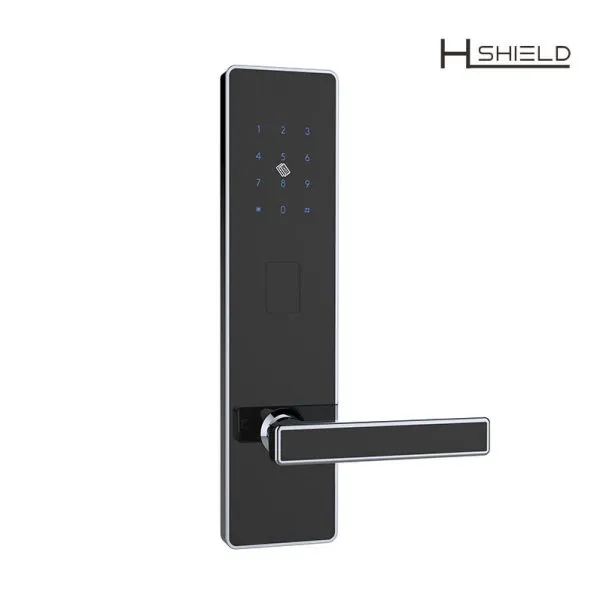
IP ratings are the obvious starting point. Entrance doors, lobby access points, and any externally exposed hardware face moisture, dust, and temperature variance that indoor-only rated devices simply aren’t built for. IP65 is a reasonable minimum for semi-exposed positions; IP67 becomes relevant where direct weather contact is possible. Procurement teams should verify these ratings against third-party test documentation — not just marketing copy — and confirm that the rated configuration matches the intended installation orientation.
Access control standards add another layer. For multi-tenancy residential developments, the relevant frameworks typically cover data retention limits, audit log requirements, and how biometric templates are stored and encrypted on-device versus transmitted to a backend system. GDPR obligations in certain jurisdictions, for instance, place specific constraints on how fingerprint data is handled — and a fingerprint door lock for property developers operating across multiple markets needs to be evaluated against each applicable regulatory environment, not just the home market of the manufacturer.
- Confirm biometric data storage is on-device (not cloud-dependent) where local data sovereignty laws require it
- Verify that audit log capacity and retention periods meet building management or tenancy compliance requirements
- Check for UL, CE, or equivalent certification relevant to the target market
- Assess whether the device supports role-based access tiers — master, sub-administrator, tenant — required for managed residential portfolios
Anti-tamper certification and forced-entry resistance ratings also carry weight, particularly where insurance underwriters or local building codes specify minimum security grades for residential access hardware. These ratings affect liability exposure at the developer level — not just door performance.
And certifications have expiry dates. A device certified to a standard that has since been superseded may create compliance gaps mid-project. Procurement teams sourcing fingerprint lock for apartment projects at volume should request current certification documentation and confirm the manufacturer’s process for maintaining compliance as standards evolve.
How to Build a Fingerprint Door Lock Mockup Unit Checklist Before Committing to a Supplier
Requesting a mockup unit before issuing a purchase order is standard practice in hardware procurement — and for fingerprint lock for apartment projects at scale, it’s non-negotiable. A sample evaluation catches integration failures, firmware inconsistencies, and build quality gaps before they become line items on a remediation budget. The question is what, exactly, to evaluate once the unit arrives.
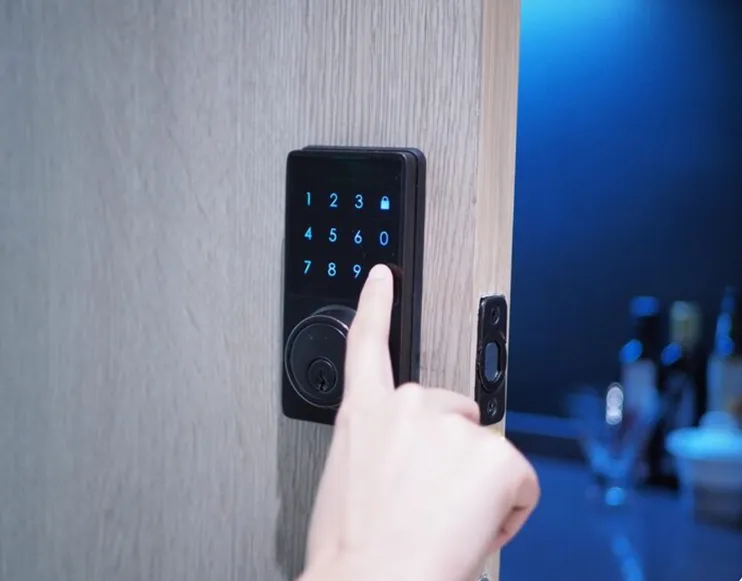
Start with the physical construction. Check housing tolerances, backplate alignment, and the feel of the fingerprint sensor under repeated use. A sensor that enrolls cleanly in controlled conditions but degrades after exposure to humidity or repeated handling is a field problem waiting to happen — and managed residential environments generate heavy daily contact cycles.
From there, move to software verification. Any fingerprint door lock for property developers needs to demonstrate role-based access configuration out of the box: enroll a master credential, create a sub-administrator tier, then assign and revoke tenant-level access. If that workflow requires third-party tools, undocumented firmware commands, or a supplier technician on-site, that’s a red flag for ongoing operational complexity.
The mockup evaluation checklist should cover:
- Fingerprint enrollment speed and rejection rate across multiple testers (include users with worn or dry skin — a common real-world failure point)
- Access log retrieval — confirm the data format is compatible with existing property management software
- Tamper alert behavior: trigger the anti-tamper sensor and verify the alert reaches the intended management endpoint
- Battery consumption under simulated daily load — request the supplier’s published cycle data and cross-reference against the mockup’s draw
- Firmware update process: can it be pushed remotely, or does it require physical access to each unit?
- Certification documentation matching the physical unit’s model number — not a generic family certificate
One detail procurement teams consistently overlook: confirm that the mockup unit is production-representative. Some suppliers ship evaluation samples built to tighter tolerances than standard MOQ production runs. Requesting a unit pulled directly from a recent production batch — rather than a dedicated demo stock — gives a more accurate read on what will actually arrive at the project site.
Evaluating Fingerprint Door Lock Suppliers for Property Developers: MOQ, Lead Times, and Long-Term Support
Supplier selection for a fingerprint lock for apartment projects operates on different stakes than a single-unit retail purchase. A developer committing to a 200-unit residential block — or a portfolio rollout across multiple sites — needs a supplier relationship that holds up past the point of delivery. That means evaluating three things before a purchase order is signed: minimum order quantities, realistic lead times, and the depth of post-sale support.
MOQ thresholds vary considerably across the manufacturer landscape. Factory-direct suppliers typically set MOQs between 50 and 500 units depending on model complexity and smart integration features. Trading companies often offer lower entry points but add margin layers that compress your budget on larger volumes. For procurement teams sourcing fingerprint door lock for property developers specifically — where phased delivery across construction stages is common — it’s worth negotiating staged release schedules against a single committed volume, rather than accepting a flat bulk shipment that arrives before the site is ready to receive it.
Lead times deserve more scrutiny than most RFQ processes give them. Standard production lead times quoted at inquiry rarely account for certification verification delays, component sourcing bottlenecks, or port congestion on the shipping end. A reasonable question to put to any shortlisted supplier: what was the actual delivered lead time on your last three orders of comparable volume? The answer — not the quoted figure — tells you what to build into your construction programme.
- Confirm whether the supplier holds ready stock of core SKUs or operates purely on a make-to-order basis
- Ask for a written escalation protocol — who do you contact if a production delay threatens your handover date?
- Clarify warranty terms at the unit level: does a defective lock get replaced on-site, or shipped back to the factory?
- Request references from at least one completed residential development project of similar scale
Long-term support is where supplier relationships tend to unravel quietly. Firmware compatibility across a multi-year building lifecycle, availability of replacement hardware for discontinued models, and access to technical documentation for facilities management teams — these are not afterthoughts. They are procurement criteria that belong in the supplier evaluation scorecard from day one.
Conclusion
The technology itself isn’t the hard part anymore — fingerprint lock for apartment projects has matured enough that the hardware is largely reliable across reputable suppliers. What separates a smooth rollout from a costly one is everything around the hardware: lead times, escalation contacts, warranty logistics, and whether your supplier will still answer the phone three years into the building’s lifecycle.
Get the procurement criteria right before you spec a single unit.
Treat supplier vetting with the same rigour you’d apply to any critical building system — because when a handover date slips or a defective batch lands on-site, “we didn’t ask” is not a defensible position.
Frequently Asked Questions
Q: What is a fingerprint lock for apartment projects, and how does it differ from a standard smart lock?
A: A fingerprint lock for apartment projects is a biometric access control device designed specifically for multi-unit residential deployment — meaning it’s built to handle high traffic volumes, multiple enrolled users per unit, and the kind of wear that a single-family smart lock simply isn’t rated for. The core difference is scale: these units typically support larger fingerprint databases, offer property management integrations, and are specified with commercial-grade duty cycles rather than consumer-grade ones.
Q: How many fingerprints can a single lock unit store?
A: Storage capacity varies by model, but units specified for apartment use typically hold anywhere from 50 to several hundred fingerprint templates — enough to cover residents, authorized family members, and building staff without hitting a ceiling mid-tenancy. If your project has high unit turnover or co-living arrangements, verify the per-lock capacity before you spec, not after.
Q: How long does it take to install fingerprint locks across a large apartment project?
A: Installation time per door is usually 30 to 60 minutes for a straightforward retrofit onto a standard door prep — but that number compounds fast across a 200-unit building. Factor in door prep variations, wiring requirements if you’re integrating with an access control backbone, and the enrollment process for initial residents, which is often underestimated on project schedules.
Q: Why do fingerprint lock for apartment projects fail more often than developers expect?
A: Most failures aren’t hardware failures — they’re integration failures. The lock works fine in isolation, then gets connected to a third-party access control system or intercoms panel it was never tested against, and suddenly you have authentication delays or enrollment sync errors. Vetting supplier compatibility documentation before procurement is the step that gets skipped most often.
Q: How much does a fingerprint lock for apartment projects cost compared to a traditional deadbolt setup?
A: Unit costs for apartment-grade fingerprint locks typically run several times higher than a standard deadbolt — but that comparison misses the point. The real cost model includes rekeying savings over the building’s lifecycle, reduced lockout call-outs, and the operational overhead of managing physical keys across hundreds of units. When you run a five-year total cost of ownership analysis, the gap narrows considerably — and sometimes reverses.
Q: Can a fingerprint lock for apartment projects be managed remotely by building management?
A: Remote management capability depends entirely on whether the lock is networked — standalone biometric units don’t offer it, while locks integrated into a property management platform or cloud-based access control system can allow remote enrollment, audit log access, and credential revocation. This distinction should be one of the first questions on your supplier evaluation checklist, not an afterthought during commissioning.
Q: Is it worth specifying fingerprint locks on every door in a mixed-use apartment development, or just certain areas?
A: A tiered approach is usually smarter — biometric locks on unit entry doors and high-security zones (plant rooms, amenity spaces, parking access), with simpler credential types elsewhere. Blanket specification across every door in a mixed-use building often inflates costs without proportional security benefit, and it creates a larger maintenance footprint than most building management teams are resourced to handle.
Q: What happens when a resident’s fingerprint doesn’t register — and how common is that?
A: False rejection rates — where a valid fingerprint fails to authenticate — vary by sensor quality and environmental conditions like dry skin, cuts, or cold weather. Reputable apartment-grade units typically offer fallback access methods (PIN, key card, or physical key override) precisely because this scenario isn’t rare enough to ignore. Any fingerprint lock for apartment projects that ships without a reliable fallback method is a liability waiting to surface at 2am on a cold night.